

Andy Burnham Social Care Funding Plan Explained
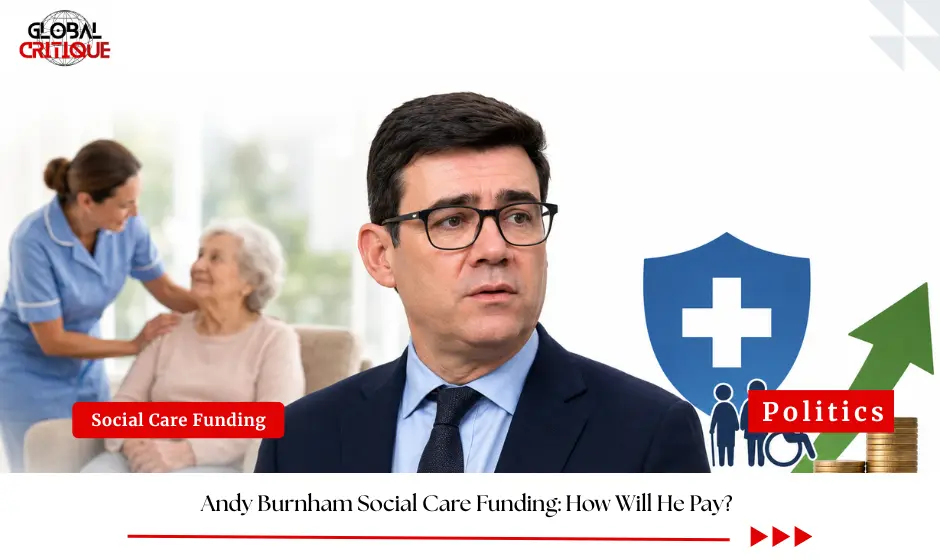
The Andy Burnham social care funding plan is not yet a settled tax package. Since becoming prime minister on 20 July 2026 and announcing his new cabinet, Burnham has promised to reform England’s means-tested care system and build a National Care Service. He says the country must agree what support the state should provide and how the public should pay for it. As of 28 July, no final levy, tax rate, cost cap or start date had been confirmed.
What Happened
Burnham makes social care a top priority just hours after stepping into Number 10. I am ready to be political about solving a problem that governments for the nearly three decades have shied away from. He also suggested lack of provision in the community places increased pressure on the hospitals, particularly if patients with dementia or other chronic conditions needed access to adequate treatment outside the NHS.
The government is expected to use the independent commission led by Baroness Louise Casey to build public and cross-party support. Its official terms require a plan for implementing a National Care Service, a national conversation about entitlements and funding, and recommendations that can be introduced gradually.
The approach also connects with Burnham’s No 10 North plan, which is intended to bring ministers, mayors and public bodies closer to local delivery. Social care reform, however, mainly concerns England because Scotland, Wales and Northern Ireland operate different funding and entitlement systems.
How Will Andy Burnham Pay for Social Care?
The government has not chosen a funding method. Burnham has signalled that more revenue may be required, but reports about a specific “death tax” remain unconfirmed.
A Social Care Levy on Estates
One option associated with Burnham is a care levy collected from estates after death. Reports have discussed replacing inheritance tax with a broader levy, sometimes described as a flat 10 per cent charge. No official proposal has confirmed that rate, the threshold, exemptions, treatment of family homes or whether inheritance tax would be abolished.
General Taxation or Social Insurance
A National Care Service could instead be funded through general taxation or a dedicated social care levy paid during working life. A ring-fenced contribution would make the purpose visible, while general taxation could spread the cost across a wider base.
Another option is social insurance, using compulsory contributions to provide defined care support while retaining some personal payments. International systems differ widely, with countries such as Germany and Japan offering defined support while requiring individuals to pay part of their costs.
A Phased Start With Free Personal Care
Burnham may begin with free personal care rather than making every care expense free. This would cover eligible help with washing, dressing and eating. It would not automatically pay for accommodation, food or energy costs in a care home.
Current estimates suggest a Scottish-style free personal care offer could cost about £7 billion a year by 2035–36. A broader NHS-style offer could cost around £18.5 billion annually by then. These are policy estimates rather than an announced government budget.
What Could Change for Families?
England currently applies both a needs assessment and a financial means test. In 2026–27, people with more than £23,250 in relevant assets generally pay the full cost of residential care. Those between £14,250 and £23,250 receive means-tested support but still contribute. Income may still be considered below the lower limit.
A higher social care asset threshold could extend public support. A care cost cap could protect families from unlimited eligible personal-care bills. Free personal care would create a basic entitlement, although people might still face substantial accommodation charges.
“NHS-style social care” would not necessarily remove housing and daily living costs. Even Scotland’s free personal care system continues to means-test other parts of residential care.
Why Reform Matters to the NHS
Poor access to community support contributes to NHS delayed discharge. Patients may stay in hospital longer than they are medically fit to do so as domiciliary care, rehabilitation or a suitable nursing home environment can not be provided. That reduces bed capacity and can delay treatment for others.
Reform would affect working-age disabled adults, unpaid careers, councils, care workers and NHS patients as well as older people. The Casey commission is required to consider the different needs of older people and working-age disabled adults.
The funding debate also sits beside Burnham’s wider economic programme, including the UK Scale-up Fund and changes covered in Global Critique’s UK pension reform guide. Those policies do not pay for social care directly, but they illustrate the competing demands facing the Treasury.
Official and Public Reaction
Local government supports reform but wants councils to remain central to delivery. An LGA consultation involving more than 600 contributors called for sustainable national funding, stronger prevention, better workforce conditions and clearer accountability. It said a National Care Service should improve consistency without removing local democratic leadership.
Political resistance has formed around possible tax rises. Kemi Badenoch, the leader of the Conservative party, has stated funding reform should happen in a ‘down’ phase, achieved by cuts, not raising taxes or debt. Liberal Democrat leader Ed Davey has supported cross-party work. That divide helps explain Burnham’s emphasis on a national conversation.
Timeline and Possible Next Steps
Burnham promoted a National Care Service while serving as health secretary under Gordon Brown. The 2010 proposal did not survive the subsequent change of government.
A system to cap eligible care costs did establish a basis under the later Care Act 2014 but were pushed back, and eventually ditched for the second time.
The Casey commission was established in 2025 and asked to report its first phase in 2026. Its terms call for practical recommendations that could be delivered gradually over a decade.
Upon taking office on 20 July 2026 Burnham reiterated his promise to do. The next meaningful steps are likely to include a clearer timetable, defined service entitlements, costed funding options and a Treasury response. Until those details appear, claims that a death tax has been decided should be treated cautiously.
Before political claims become accepted as fact, follow Global Critique’s latest UK politics coverage for clear reporting on every confirmed development.
What Readers Should Know
People arranging care now remain under the existing rules. No new levy has taken effect, the £23,250 upper capital threshold remains in place for 2026–27 and there is no active lifetime care cost cap.
Families should judge the eventual proposal by five questions: what care is free, which costs remain personal, who contributes, when changes begin and whether providers receive enough funding to deliver it.
Conclusion
Andy Burnham has made adult social care reform a defining test of his premiership, but he has not answered the full funding question. An estate levy, general taxation, social insurance, free personal care and a revised care cost cap remain possible options.
The strongest plan will give people clearer rights, protect families from unpredictable bills and reduce pressure linked to NHS delayed discharge.
Read beyond political claims and understand what new policies mean for your family, finances and future with Global Critique.
Frequently Asked Questions
What is Andy Burnham’s social care plan?
Burnham wants to create a National Care Service offering more consistent support and clearer rights across England. The final service entitlement and funding structure have not been confirmed.
How will Andy Burnham pay for social care?
No final method has been selected. Options under discussion include general taxation, social insurance, an estate levy and phased reforms such as free personal care.
Has Andy Burnham announced a death tax?
No confirmed government policy has established a death tax. Media reports have discussed an estate-based levy, but the rate, threshold and exemptions remain unconfirmed.
What would a National Care Service provide?
Its final offer has not been defined. Possible models include free personal care, nationally consistent eligibility and closer coordination between councils, care providers and the NHS.
Would social care become free like the NHS?
Not necessarily – free personal care might include help with washing, dressing and eating but leave you with costs like accommodation, food and bills.
What is the current social care asset threshold?
The capital ceiling for England is £23,250, with an lower capital threshold in England of £14,250, for the year 2026/27.
Will there be a cap on care costs?
No active lifetime cap currently applies. A new cap may be considered, but Burnham has not announced one.
How much could free personal care cost?
Current estimates suggest a Scottish-style model could cost approximately £7 billion annually by 2035–36. The figure depends on eligibility, demand and which services are included.
How does social care affect NHS waiting times?
Lack of community support can contribute to hospitals beds being held by patients ready for discharge without appropriate community support packages being available.
When could Burnham’s reforms begin?
No implementation date has been announced. The Casey commission must first develop recommendations and the government must publish a funded response.