

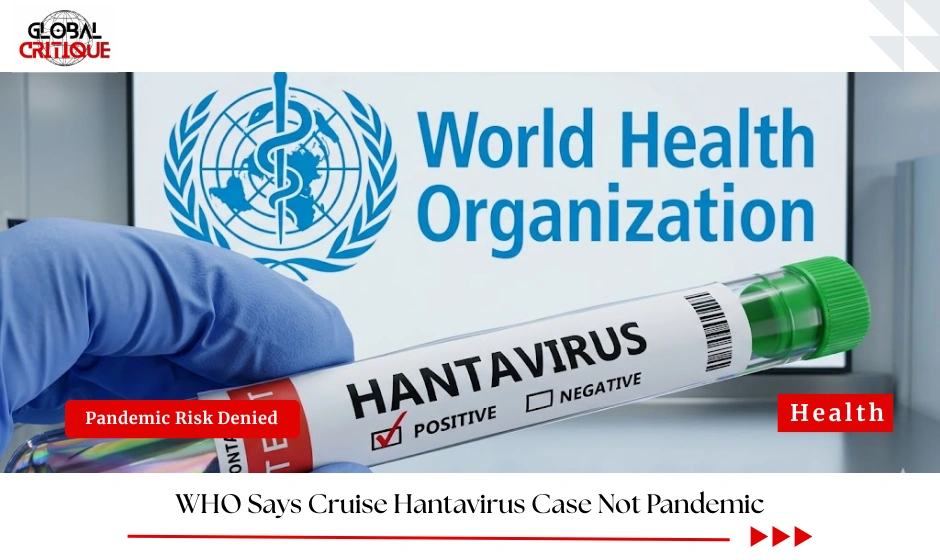

Hantavirus Cruise Ship Case Sparks Global Concern but WHO Says Pandemic Risk Remains Low
A recent hantavirus case reported aboard a cruise ship has triggered international attention and renewed public concern over infectious disease risks in global travel environments. The incident raised immediate questions due to the confined nature of cruise ships, where viruses and illnesses can spread rapidly among passengers and crew.
However, the World Health Organization has clarified that the situation does not represent the beginning of a pandemic and currently poses a very low threat to the wider public.
Health officials have not reported evidence of wider onboard transmission linked to the isolated case.
Cruise Ship Passenger Diagnosed With Hantavirus
The health alert began after a passenger aboard a cruise ship tested positive for hantavirus during routine onboard medical checks.
Following the diagnosis, the ship’s medical team immediately activated emergency health procedures, including isolation measures and health monitoring for passengers who may have been exposed.
Cruise ships are highly monitored environments because thousands of passengers and crew members share enclosed spaces such as dining areas, entertainment venues, cabins, and recreational facilities.
As a result, even a single confirmed infectious disease case can quickly attract global attention and trigger precautionary measures.
Travel Environments Increase Disease Monitoring Sensitivity
The strong response to the incident reflects heightened global sensitivity toward infectious disease risks following the COVID-19 pandemic.
Cruise ships remain particularly vulnerable to health concerns because illnesses can spread more easily in high-density environments. Previous outbreaks involving viruses such as norovirus and COVID-19 reinforced the importance of rapid containment systems across the cruise industry.
At the same time, hantavirus itself is considered a serious illness despite being relatively rare. The virus is typically transmitted from rodents to humans through exposure to contaminated urine, saliva, or droppings.
Unlike highly contagious respiratory viruses, hantavirus is generally not known for widespread human-to-human transmission, which significantly reduces the likelihood of large-scale outbreaks.
According to the Centers for Disease Control and Prevention, hantavirus infections are relatively rare and are not typically associated with widespread human-to-human transmission.
WHO, Cruise Operators, and Health Authorities Respond Quickly
The situation is being closely monitored by the World Health Organization alongside the cruise operator’s onboard medical teams and international health authorities.
The WHO issued a public statement confirming there is currently no evidence suggesting the incident could develop into a pandemic-level threat.
Cruise industry operators also activated emergency response systems immediately after the diagnosis was identified. These protocols included passenger monitoring, sanitation procedures, and exposure tracing.
Global health agencies continue maintaining surveillance as a precautionary measure while reassuring the public that the situation remains contained.
Cruise Industry Remains Highly Sensitive to Health Incidents
The incident highlights how closely the global cruise industry is monitored following the severe disruptions caused by COVID-19.
The international cruise sector generates billions of dollars annually and depends heavily on passenger confidence, tourism stability, and strong health safety systems. Even isolated medical incidents can affect public perception and travel behavior.
Cruise companies have invested heavily in medical infrastructure, sanitation systems, onboard laboratories, and rapid response procedures in recent years to prevent future large-scale outbreaks.
The response to this hantavirus case demonstrates. How the industry now reacts aggressively even to lower-risk infectious disease concerns.
Containment Measures and Monitoring Continue
After the diagnosis was confirmed, the affected passenger was isolated. While medical teams began tracing potential contact exposure onboard.
Enhanced sanitation procedures were introduced across the vessel. And additional health checks were conducted among passengers and crew members.
So far, authorities have reported no evidence of additional infections linked to the incident. This supports the assessment that the situation remains isolated and under control.
Health experts have also emphasized the importance of relying on verified information rather than social media speculation. Which initially amplified fears surrounding the case.
The WHO’s clarification played a major role in calming public concern and reducing misinformation.
What Comes Next for Global Travel Health Monitoring
Health authorities are expected to continue monitoring passengers and crew members as a precautionary measure.
Cruise operators will likely maintain elevated. The health surveillance and sanitation procedures until the situation is fully resolved.
Experts believe the incident is unlikely to escalate further because hantavirus does not typically spread efficiently between people. However, officials stress that vigilance remains important in all international travel settings.
The event may also encourage additional reviews of health screening and emergency preparedness systems within the global cruise industry.
Conclusion: Rapid Response Helps Prevent Panic Over Isolated Health Incident
The hantavirus case aboard the cruise ship demonstrates how quickly health concerns can attract international attention within the modern travel industry.
This situation also highlights how global travel operators and health agencies. Now respond far more rapidly to isolated disease cases following lessons learned from the COVID-19 pandemic.
By responding quickly and transparently, the World Health Organization and cruise health teams helped prevent unnecessary panic while maintaining public safety.
Although the incident briefly raised fears of a broader outbreak. This is current evidence strongly suggests the situation remains isolated and under control, reinforcing the effectiveness of modern health monitoring systems in international travel environments.
Stay updated on global health and travel news on Global Critique.