

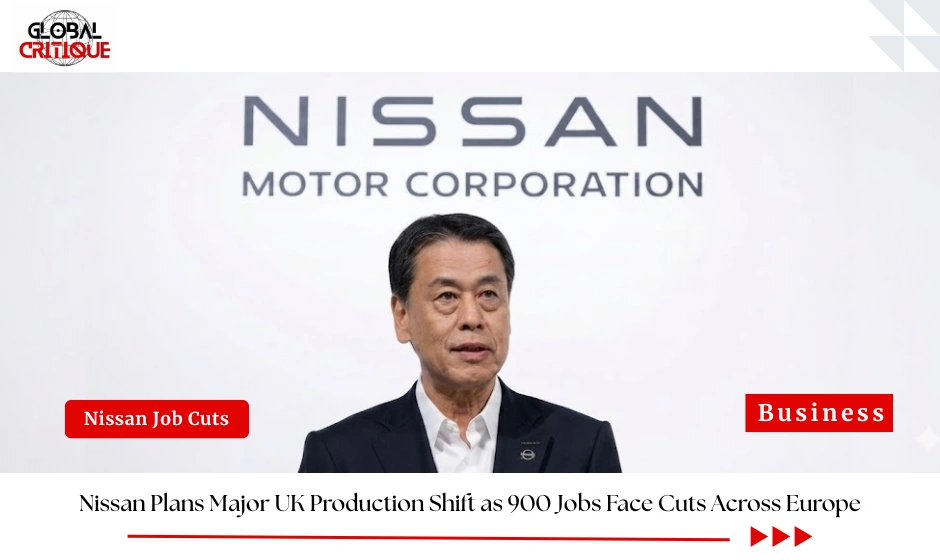

Nissan’s UK Restructuring Part of Wider Plan to Reduce 900 Jobs in Europe
Nissan has announced a significant restructuring move that will reshape its manufacturing and workforce strategy across Europe. The Japanese automaker confirmed it will discontinue one of its production lines at its major UK facility in Sunderland. Alongside this operational change, the company is also planning to reduce approximately 900 jobs across its European workforce as part of a broader recovery plan.
This decision reflects Nissan’s effort to adapt to evolving market conditions while improving efficiency and long-term sustainability. The move comes at a time when global car manufacturers are under increasing pressure to streamline operations and remain competitive.
Production Line Consolidation at Sunderland Plant
At the heart of this announcement is the consolidation of production lines at Nissan’s Sunderland plant. One of the largest automotive manufacturing sites in the United Kingdom. The company will merge two existing lines into a single production stream responsible for assembling popular models such as the Leaf, Juke, and Qashqai.
Despite concerns about potential job losses. The Nissan has clarified that this specific change will not result in layoffs at the Sunderland facility. Instead, the consolidation is designed to make better use of resources and address the issue of underutilization. As the plant is currently operating below its full capacity.
A company spokesperson emphasized that the decision is part of a long-term strategy to maximize efficiency while maintaining production stability in the UK.
Job Cuts Across Europe Raise Concerns
While jobs at the Sunderland plant remain secure for now. Nissan has confirmed that it is in discussions to cut around 10 percent of its European workforce. This reduction translates to roughly 900 positions across the region.
The planned job cuts are expected to affect several countries, with changes including the partial closure of a warehouse in Barcelona and adjustments to logistics operations. The company also indicated that fewer than 50 roles in UK-based office positions could be impacted.
Nissan has begun consultations with employees and relevant stakeholders, aiming to manage the transition carefully while minimizing disruption. The company stated that these discussions are part of a broader effort to simplify organizational structures and ensure long-term profitability.
RE:Nissan Recovery Plan Driving Changes
These restructuring steps are being carried out under Nissan’s “RE:Nissan” recovery plan, a strategy focused on building a more agile and resilient business model. According to the company, the goal is to respond more effectively to market fluctuations and align operations with current demand levels.
The plan emphasizes cost control, operational efficiency, and strategic partnerships. By reducing excess capacity and optimizing production, Nissan aims to strengthen its position in an increasingly competitive global automotive market.
A spokesperson noted that the changes are intended to create a “leaner, more resilient business” capable of adapting quickly to industry shifts.
Opportunity for New Manufacturing Partnerships
One notable outcome of the production line consolidation is the availability of additional capacity at the Sunderland plant. By freeing up one production line, Nissan opens the door for potential partnerships with other manufacturers.
This approach could allow another automotive company to use the facility to build its own vehicles, helping to offset unused capacity and generate additional economic activity. Such collaborations are becoming more common in the industry as companies seek to share resources and reduce costs.
Talks with Chinese Automaker Chery
As part of this strategy, Nissan has reportedly held discussions with several companies, including the Chinese automotive giant Chery. The company, which owns brands such as Jaecoo and Omoda, has been expanding rapidly in international markets, including the UK.
Chery has been present in the UK since late 2024 and has seen strong growth in sales. It is already preparing to assemble vehicles at a former Nissan facility in Barcelona, indicating its interest in strengthening its manufacturing footprint in Europe.
Although Chery has not officially commented on the potential collaboration, its UK leadership has previously acknowledged that the company is evaluating the possibility of establishing a production base in the country. If such a partnership materializes, it could play a key role in utilizing the available capacity at Sunderland.
Industry Context and Broader Implications
Nissan’s restructuring reflects wider trends across the automotive industry. Manufacturers worldwide are reassessing their production strategies in response to shifting consumer demand, rising costs, and the transition toward electric vehicles.
The move to consolidate operations and reduce workforce numbers highlights the challenges facing traditional carmakers as they navigate a rapidly changing landscape. While efficiency improvements are essential for long-term survival, these decisions often come with significant social and economic consequences.
For the UK, maintaining production at the Sunderland plant remains a positive sign, especially given its importance to the local economy. However, the broader job cuts across Europe underscore the uncertainty facing workers in the sector.
Looking Ahead
Nissan’s latest announcement signals a clear intention to streamline operations. While exploring new opportunities for collaboration and growth. The company’s ability to successfully implement its recovery plan will depend on how well it balances cost reduction with innovation and market expansion.
The potential involvement of external partners like Chery could reshape the future of manufacturing at Sunderland, offering both challenges and opportunities. As discussions continue, the focus will remain on ensuring stability for workers while positioning the company for long-term success.
Conclusion
Nissan’s decision to close a UK production line and cut 900 jobs across Europe marks a significant moment in. Its ongoing transformation. While the company seeks to build a more efficient and adaptable business, the impact on employees and regional operations cannot be overlooked.
As the automotive industry continues to evolve, Nissan’s strategy highlights the difficult choices companies must make to remain competitive in a changing global market.
visit our homepage for more in-depth analysis and breaking stories.