

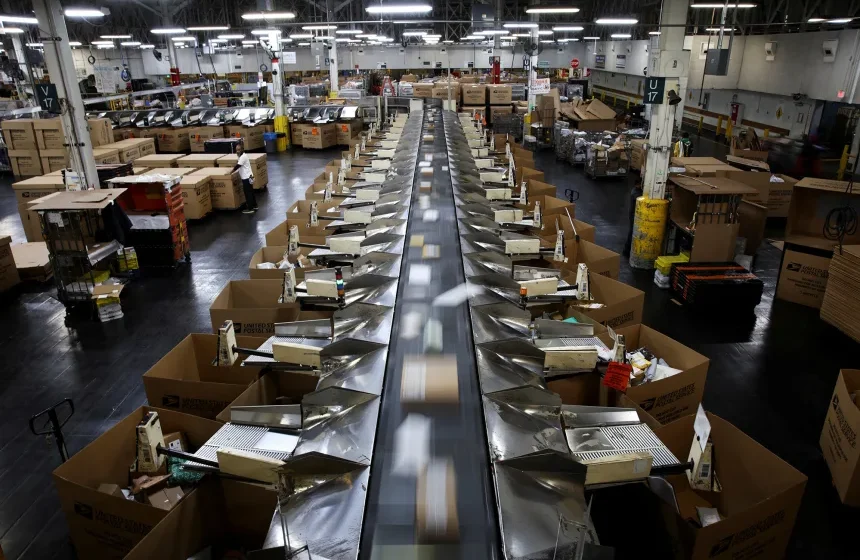

The renewed partnership between the U.S. Postal Service (USPS) and Amazon highlights how deeply intertwined public infrastructure and private e-commerce have become in the modern economy. While the agreement may appear to be a routine logistics arrangement, it carries broader implications for consumers, workers, and the future of package delivery in the United States.
Amazon continues to rely on USPS for a critical part of its delivery network, particularly for last-mile service in rural and less densely populated areas. Despite Amazon’s massive investment in its own trucks, planes, and drivers, the postal service remains uniquely positioned to reach every address in the country. That nationwide reach makes USPS an essential partner, especially during peak periods such as the holiday shopping season.
For USPS, the deal represents both opportunity and pressure. Package delivery has become one of the postal service’s most important revenue streams as traditional mail volumes decline. High-volume customers like Amazon help keep facilities operating and workers employed. However, the increased workload also strains postal employees and infrastructure, especially during seasonal surges when staffing and equipment are already stretched thin.
Critics of the partnership often question whether USPS is adequately compensated for the services it provides. Some argue that discounted bulk shipping rates benefit Amazon disproportionately, while others counter that without large clients, USPS would face even steeper financial challenges. Postal officials maintain that pricing reforms and updated contracts are designed to ensure long-term sustainability.
From Amazon’s perspective, the partnership offers reliability and flexibility. USPS provides a built-in surge capacity that allows Amazon to handle spikes in demand without overbuilding its own network. This hybrid approach — combining private logistics with public infrastructure — has become central to Amazon’s delivery strategy.
For consumers, the deal mostly operates behind the scenes, but its impact is tangible. Faster deliveries, fewer delays, and broader coverage are direct benefits. At the same time, concerns remain about worker fatigue, delivery bottlenecks, and whether public services should play such a large role in supporting private corporations.
In the bigger picture, the USPS–Amazon deal reflects a shifting delivery landscape. As online shopping continues to grow, the line between public service and commercial enterprise is increasingly blurred. The challenge moving forward will be finding a balance that protects USPS’s public mission while allowing it to remain financially viable in a competitive, e-commerce-driven world.