

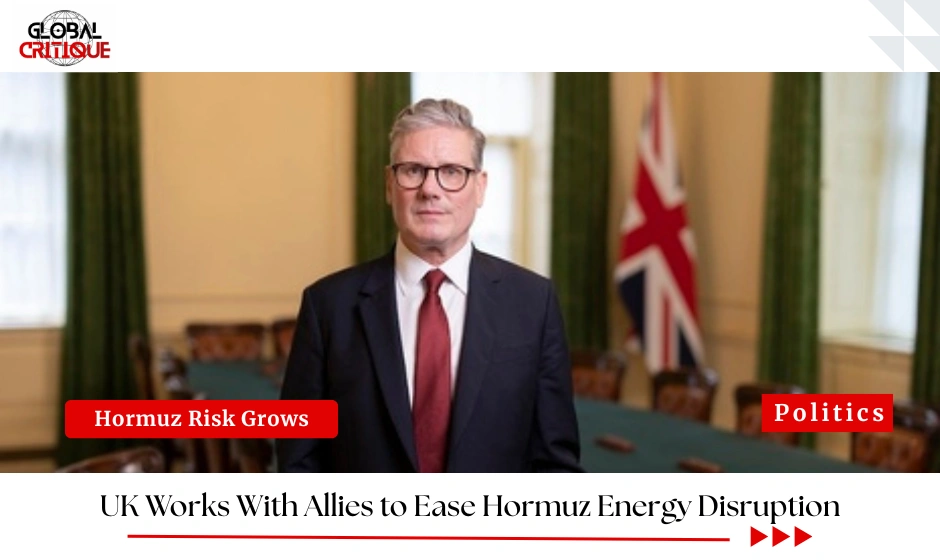

UK Push to Reopen Hormuz Puts Economy and Energy Costs in Focus
The UK is working with allies on a plan to help reopen the Strait of Hormuz, a move aimed at easing pressure on global energy flows and limiting the wider economic fallout from the conflict. The route matters far beyond the Gulf because it handles a major share of world oil and gas shipments. When that flow is disrupted, the impact quickly reaches fuel costs, inflation, transport, and household bills.
Energy Prices Remain the Biggest Economic Threat
The main economic risk is still energy. The disruption around Hormuz has already pushed Brent crude above $104 a barrel, which raises the chance of higher business costs and renewed inflation pressure. Expensive energy can spread through freight, manufacturing, food supply, and consumer spending, which is why reopening the route has become a priority.
The UK Is Trying to Limit Market Damage
The current focus is on restoring freedom of navigation rather than widening the war. The UK prime minister said reopening the strait will not be easy, but argued it is necessary to support market stability and reduce the economic shock caused by the closure. The government has also linked the disruption to pressure on oil, gas, and fertiliser supplies, all of which can feed into prices at home.
Allies Are Moving Carefully
The wider international response remains cautious. Several countries have not committed to sending ships, while European officials are still discussing what kind of mission would be realistic. That hesitation matters because the longer uncertainty lasts, the harder it becomes for markets to price energy risk with confidence.
Businesses Could Feel the Pressure Quickly
For businesses, this is about more than geopolitics. Higher oil prices can hit logistics costs, squeeze profit margins, and weaken consumer demand if households start paying more for fuel and heating. Shipping insurance costs have also risen sharply in the area, which adds another layer of expense for trade moving through the region.
Emergency Measures May Help but Risk Still Remains
Emergency oil stock releases have already been used to soften the shock, but they cannot fully replace stable shipping through Hormuz if disruption continues. That means any plan to reopen the route matters not only for energy traders, but for the wider global economy as well.
The Economic Outlook Depends on Speed and Stability
The faster the route is stabilized. The better the chance of easing pressure on inflation and business costs. If delays continue, markets may face a longer period of high oil prices, weak confidence, and stronger pressure on growth. For now, the Hormuz route has become one of the biggest economic pressure points in the world.
Follow the latest developments shaping UK and global politics.