

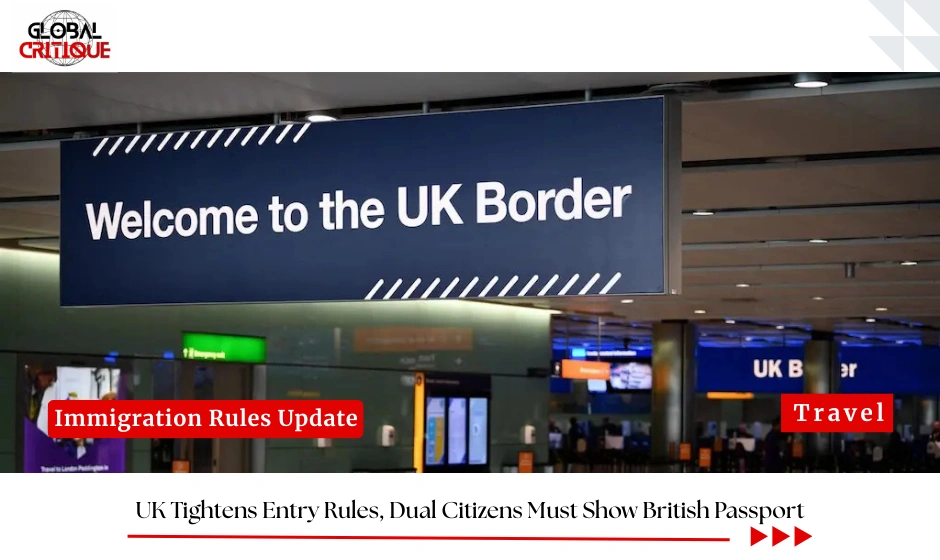

UK Travel Policy Update Affects Dual Nationals from 25 February
A new change to UK border policy is causing concern among dual British citizens living abroad. From 25 February, travellers who hold British nationality alongside another citizenship must present a valid British passport when travelling to the UK. Those without one risk being denied boarding on flights, ferries, or trains.
The Home Office warning follows a wave of complaints from British citizens overseas who say they were caught off guard by the new requirements and now fear disruption to upcoming travel plans.
New Travel Permission System Introduced
The rule forms part of a wider update to border controls. From late February. It most travellers will need formal permission before entering the UK. Short-term visitors must apply for an Electronic Travel Authorisation, which costs £16.
However, dual British nationals are excluded from the visitor system and must instead show a British passport. Those without one must apply for a certificate of entitlement, which costs £589 and must be attached to their non-British passport before travel. Many critics say the high fee places a heavy financial burden on families.
Families Abroad Face Unexpected Costs and Stress
Several British citizens living overseas say the policy has created confusion and anxiety. One dual national based in Germany worries that her children may struggle to travel because they do not hold British passports. She described the change as sudden and poorly communicated, adding that maintaining multiple passports for a family can be costly.
Another long-term resident in Spain said she obtained Spanish nationality. After Brexit and previously travelled freely with her Spanish passport. Because Spain requires some naturalised citizens to renounce their previous nationality, presenting a British passport at the airport could create legal complications for her status.
Travellers Fear Being Stranded Abroad
Some dual nationals have already discovered problems with upcoming journeys. A British-Italian traveller explained he had always used his Italian passport for work trips and only recently learned about the new rule. With a return flight scheduled after the deadline. He worries he may be unable to re-enter the UK without either a British passport or the costly certificate, which currently faces processing delays.
Stories like these have increased pressure on the government to provide clearer guidance and transitional arrangements.
Government Defends Policy as Part of Digital Border Plan
Officials say the changes are part of a wider move towards digitised border controls designed to streamline travel while improving national security. According to the Home Office. It is requiring proof of British citizenship through a passport or certificate will help create a smoother entry process and provide authorities with better oversight of travellers entering the country.
Campaign Groups Call for Affordable Alternatives
Advocacy organisations have urged ministers to reconsider the £589 certificate fee and introduce a lower-cost digital authorisation similar to systems used in other countries. Campaigners argue that the UK already has the technology to create a more affordable solution that would prevent British citizens from facing barriers when returning home.
As the deadline approaches. It many dual nationals remain uncertain about how the new rules will affect their travel plans. While pressure continues to mount for clearer communication and more flexible entry options.