


Pound Loses Ground as UK Business Growth Slows Under Iran War Pressure
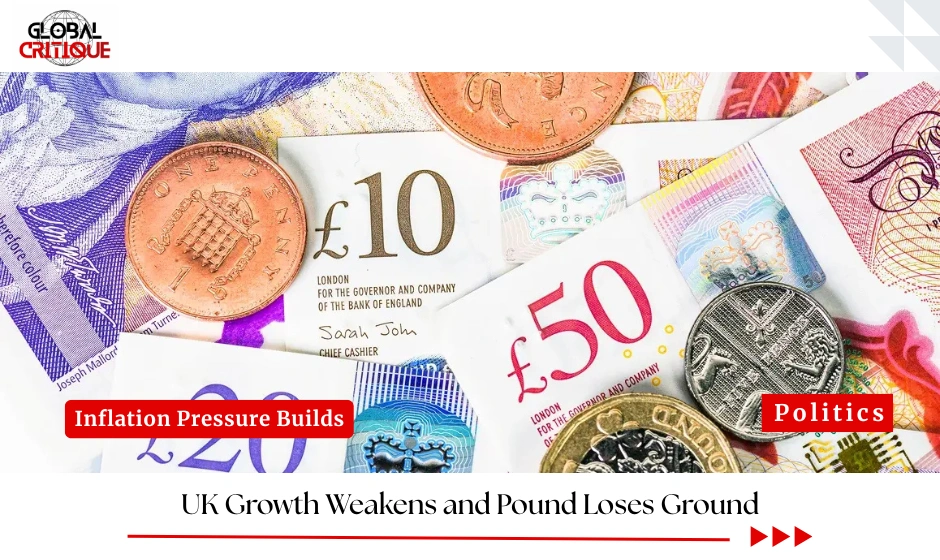
The pound weakened against the dollar as signs of economic strain began to show more clearly in the UK. Sterling fell about 0.4% to $1.3405, giving back part of the previous day’s gains as markets reacted to slower business growth and rising inflation pressure linked to the Iran war.
UK Business Activity Has Slowed Sharply
Fresh business survey data showed UK private sector growth in March was the weakest in six months. The S&P Global composite PMI fell to 51.0 from 53.7 in February, showing the economy is still expanding but at a much slower pace than before.
Manufacturers Are Facing a Major Cost Shock
The biggest pressure point came from manufacturing costs. Input price inflation for manufacturers rose at the fastest pace since 1992 as fuel, transport, and raw material costs jumped. That kind of cost shock matters because it can quickly feed into factory prices, business margins, and inflation across the wider economy.
The Iran War Is Adding to Inflation Risk
The conflict has pushed up energy prices and disrupted supply chains, making it harder for businesses to manage costs. That is now feeding into UK inflation concerns just as the economy starts to lose momentum. Analysts say a prolonged conflict could weaken growth further while also keeping price pressure high.
The Bank of England Faces a Tougher Outlook
This leaves the Bank of England in a difficult position. It kept rates steady recently, but policymakers have signalled they may need to raise borrowing costs if inflation keeps rising. Markets have shifted away from expecting rate cuts and are now leaning toward at least two rate increases in 2026.
Employment and Confidence Are Also Under Pressure
The survey data showed employment falling for the 18th month in a row, while business confidence slipped to its lowest level since June 2025. That matters because weaker hiring and lower confidence can deepen the slowdown if companies cut back further on investment and expansion.
Why the Pound Is Losing Footing
For currency markets, the problem is not only slower growth. It is the mix of weaker activity and stronger inflation pressure at the same time. That combination makes the UK economy look more fragile and gives investors another reason to move cautiously on sterling. This is an inference based on the weaker PMI, faster cost inflation, and shifting rate expectations.
The Next Few Weeks Could Matter More
The next round of inflation, retail, and business data will matter more than usual because markets are trying to judge whether this is a short war shock or the start of a wider economic hit. For now, the pound is losing some of its recent strength as investors reassess the UK outlook.