

A weekend gathering of young Republicans and conservative influencers in Phoenix offered a revealing look at the tensions beginning to surface within President Donald Trump’s political coalition, even before his presidency reaches its final chapter. The event showed how divisions over ideology, identity and power are already testing the unity of the MAGA movement.
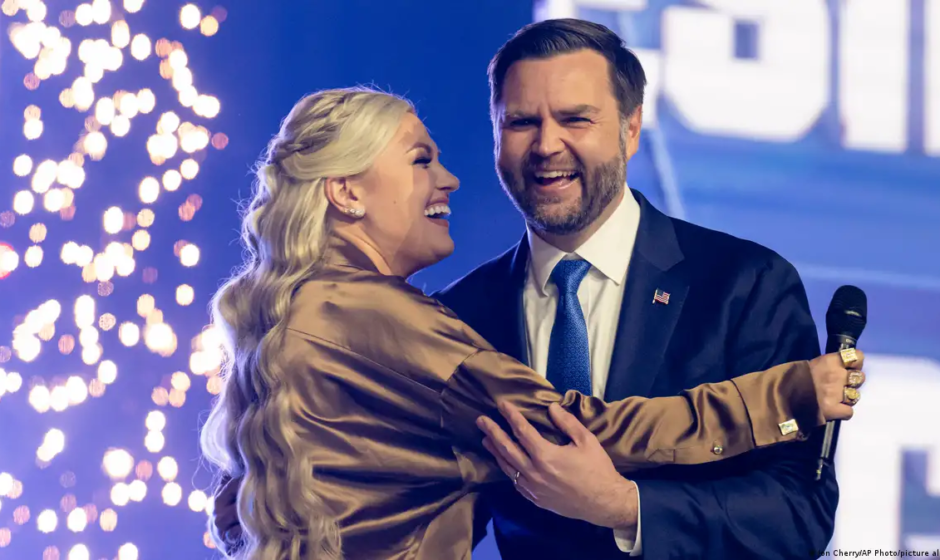
Vice President JD Vance emerged as a central figure during Turning Point USA’s annual AmericaFest, with many in attendance viewing him as the leader best positioned to keep the party’s broad coalition intact through the Trump era and beyond. In his Sunday address, Vance acknowledged the infighting openly and urged the audience not to see disagreement as weakness.
He encouraged conservatives to embrace debate rather than fear it, arguing that a movement built on independent thinking was stronger than one driven by rigid conformity. His remarks were aimed at reassuring a base increasingly uneasy about internal conflicts on issues ranging from foreign policy to culture.
Over the past year, Vance has carefully navigated the party’s growing ideological divides, working to avoid alienating any one faction. He has maintained support among sharply different groups, including advocates and critics of Israel, immigration hardliners and reform supporters, technology leaders and skeptics, foreign policy hawks and isolationists, and both populist and establishment Republicans.
The four-day conference, the first since the killing of Turning Point founder Charlie Kirk, underscored how fragile that balance has become. Speakers criticized one another from the stage, debated whether conspiracy theorists should have a place in the movement, and clashed over who truly belongs in the Republican Party and in America itself. Disputes over Israel’s influence on U.S. foreign policy further highlighted deep ideological fractures.
Vance’s political evolution has long been a point of discussion. Once aligned with Republicans who opposed Trump, he later became one of Trump’s most outspoken allies, a transition even acknowledged by senior White House officials as politically strategic. That adaptability has helped position him as the leading Republican figure heading into the 2028 conversation.
A recent CNN poll showed that 22 percent of Republicans and right-leaning independents would like to see Vance run for president, far surpassing any other potential GOP contender. During the opening night of AmericaFest, Turning Point’s new leader Erika Kirk, the widow of Charlie Kirk, publicly endorsed Vance, even though he has not announced a presidential bid.
In his speech, Vance called on attendees to pressure the Republican-led Senate to approve Trump’s judicial nominees, framing the effort as essential to delivering justice more swiftly. He criticized Democrats ahead of the midterm elections and offered early attacks on potential 2028 rivals, signaling his growing national profile.
His remarks leaned heavily into Christian nationalist themes, urging conservatives to direct their anger outward rather than toward one another. Vance argued that Christianity remains central to America’s identity, while stopping short of saying religious belief should be a requirement for citizenship.
Should he choose to run, Vance would enter the race with the backing of Turning Point USA, an organization credited with helping mobilize younger voters for Trump. Turning Point reported $84 million in revenue in 2024 and plans to deploy field operations across all 99 counties in Iowa, a crucial early primary state.
Supporters say the endorsement reflects the close relationship Vance shared with Charlie Kirk, who backed his 2022 Senate run and later strongly advocated for him to become Trump’s running mate. Several high-profile Republicans have also signaled support, further solidifying his standing within the party.
Among conference attendees, many expressed enthusiasm for Vance’s message, particularly younger voters who said his nationalist and religious framing resonated with their views. Others urged caution, arguing it was too early to shift attention away from Trump or to discuss succession plans.
Vance has largely avoided public discussion of his future ambitions, thanking supporters while sidestepping direct references to a presidential run. Those close to him say he is highly sensitive to timing and believes his political future is closely tied to whether Trump can convince voters that his presidency has delivered lasting change.
A growing challenge for Vance is how to handle extremist voices gaining influence among young conservatives, including white nationalist figures who have fueled controversy within the movement. Rather than directly confronting these groups, Vance has often sought to defuse criticism by redirecting blame toward Democrats or the media.
That approach has drawn scrutiny, particularly after he defended individuals accused of racist rhetoric and dismissed bipartisan backlash as exaggerated. Critics argue this risks emboldening fringe elements rather than isolating them.
Recent online exchanges involving debates over Israel and antisemitism further exposed the risks of this strategy, as extremist figures used the moment to amplify their messaging. While some AmericaFest speakers directly condemned such voices, Vance avoided naming them and told the crowd he had not come to denounce fellow conservatives.
As the MAGA movement looks toward an uncertain future, Vance faces the difficult task of holding together a coalition increasingly pulled in different directions. Whether his call for unity can overcome deepening ideological divides remains an open question.