
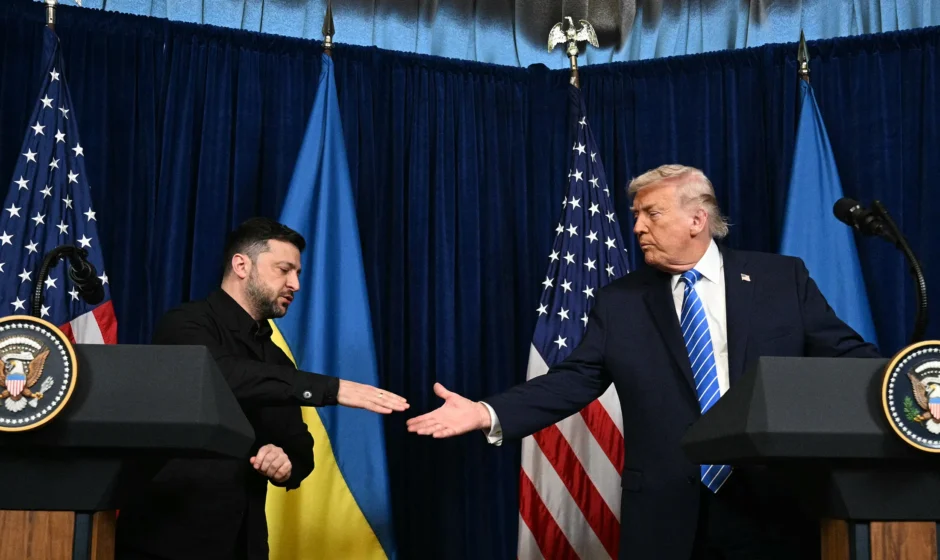

Former U.S. President Donald Trump has claimed that there has been “a lot of progress” in discussions with Ukrainian President Volodymyr Zelenskiy, highlighting renewed attention on diplomacy as the war in Ukraine continues to reshape global politics. Trump’s remarks add another layer to the evolving debate over how the conflict might be resolved — and what role the United States could play moving forward.
While details of the talks remain limited, Trump’s comments suggest an emphasis on negotiation rather than prolonged military engagement. He has repeatedly argued that stronger leadership and direct communication could accelerate an end to the conflict, positioning himself as someone capable of influencing outcomes through deal-making rather than escalation.
For Ukraine, any indication of diplomatic movement carries weight. The country remains heavily dependent on Western military and financial support, while also facing fatigue among some allies. Zelenskiy has consistently maintained that peace must respect Ukraine’s sovereignty and territorial integrity, making negotiations highly sensitive and complex.
Trump’s remarks arrive at a moment of strategic uncertainty. The war has reached a prolonged and costly stage, with neither side achieving a decisive breakthrough. International partners are balancing continued support for Ukraine against domestic political pressures and economic constraints. In this environment, talk of “progress” can influence markets, diplomatic messaging, and public expectations.
Critics caution that vague claims of advancement risk oversimplifying the realities of the conflict. Negotiations involving Ukraine, Russia, and international stakeholders are deeply complicated, involving security guarantees, territorial disputes, and long-term regional stability. Any agreement would require buy-in from multiple actors and careful coordination.
Supporters of Trump’s approach argue that diplomacy has been underutilized and that prolonged warfare benefits no one. They see engagement as a necessary step toward reducing casualties and stabilizing global markets affected by energy prices, food supply disruptions, and geopolitical risk.
From a global perspective, even the perception of progress matters. Financial markets, energy traders, and foreign governments closely monitor signals that suggest a potential de-escalation. Hints of dialogue can shift sentiment, even when concrete outcomes remain distant.
Ultimately, Trump’s comments underscore a broader truth: the Ukraine conflict is no longer viewed solely through a military lens. Diplomatic positioning, political leadership, and international negotiation are becoming increasingly central to discussions about how — and when — the war might end.
Whether the claimed progress leads to meaningful outcomes remains uncertain. But the renewed focus on talks highlights the growing recognition that the next phase of the conflict may be shaped as much by negotiation tables as by battlefields.