

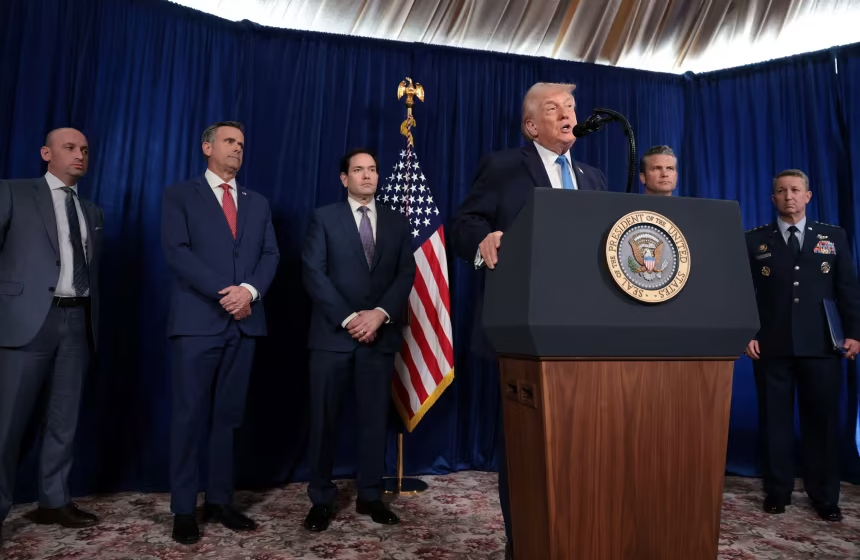

Former US President Donald Trump has indicated a potential shift in how the United States would approach Venezuela under a renewed “America First” foreign policy framework. The remarks suggest a recalibration of priorities, placing US national interests at the center of decisions while reassessing long-standing strategies toward the Latin American nation.
The comments reflect a broader pattern in Trump’s foreign policy thinking, where diplomatic engagement is often weighed against direct economic and strategic benefits for the United States. In the context of Venezuela, this could mean a more transactional approach, focusing on outcomes such as energy security, regional stability, and limiting external influence rather than pursuing broader ideological goals.
Venezuela has remained a focal point of US policy for years due to its political instability, economic collapse, and strategic importance in the region. Sanctions, diplomatic pressure, and efforts to influence political outcomes have defined previous approaches. A shift under an “America First” lens may involve reassessing which tools deliver tangible results and which impose costs without clear returns.
Energy considerations play a key role in this evolving stance. Venezuela possesses some of the world’s largest oil reserves, making it strategically relevant, particularly during periods of global energy uncertainty. A policy shift could involve prioritizing US energy interests and supply stability while balancing geopolitical risks.
The remarks also carry implications for regional diplomacy. Changes in US policy toward Venezuela can influence relationships with neighboring countries, shaping cooperation on migration, trade, and security. A more interest-driven strategy may alter expectations among allies and regional partners accustomed to a values-based US approach.
Critics argue that such a shift could reduce pressure on political reform, while supporters believe it may lead to more pragmatic outcomes. The debate highlights a long-standing tension in US foreign policy between idealism and realism, particularly in regions marked by prolonged crises.
In conclusion, Trump’s signals of an “America First” adjustment to Venezuela policy suggest a focus on practical benefits and strategic priorities. Whether this approach would lead to improved outcomes or deepen existing challenges remains uncertain. What is clear is that any policy shift toward Venezuela would have significant consequences for US relations in Latin America and the broader geopolitical landscape.