

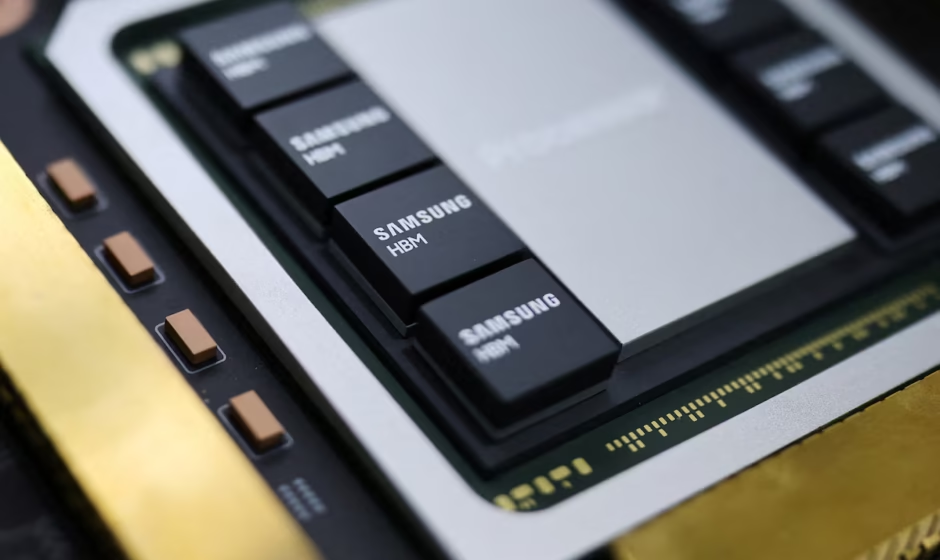

Samsung is preparing to begin production of its next-generation high-bandwidth memory chips, a move that could significantly reshape competition in the global semiconductor market. The new chips, designed to support advanced artificial intelligence workloads, are expected to enter production imminently, signaling a strategic push to secure a stronger position in the rapidly expanding AI supply chain.
High-bandwidth memory has become a critical component for AI systems, particularly those powering large-scale data processing and advanced graphics performance. As demand for AI accelerators continues to surge, chipmakers capable of delivering faster, more efficient memory solutions stand to gain a major advantage. Samsung’s upcoming production marks an effort to meet that demand while narrowing performance gaps with competitors.
Market analysts view this development as a calculated response to growing pressure from both rivals and customers seeking more reliable supply. AI-focused companies increasingly depend on cutting-edge memory to maximize computing power, reduce latency, and improve energy efficiency. Any breakthrough in this space can quickly translate into long-term contracts and deeper integration within the AI hardware ecosystem.
From a market perspective, the timing is notable. Global chip demand is being reshaped by artificial intelligence, shifting investment away from traditional consumer electronics toward data centers and AI infrastructure. Memory manufacturers are no longer competing solely on volume, but on technological leadership and speed to market.
The move also highlights how supply chain positioning has become a strategic weapon. Early production allows manufacturers to test performance, refine yields, and build trust with key partners before competitors scale up. In a sector where delays can cost billions, readiness is increasingly as important as innovation.
Looking ahead, next-generation memory production could influence pricing power, partnership dynamics, and future investment across the semiconductor industry. As AI adoption accelerates, companies that control advanced memory technologies are likely to play a decisive role in shaping the next phase of the global tech cycle.