

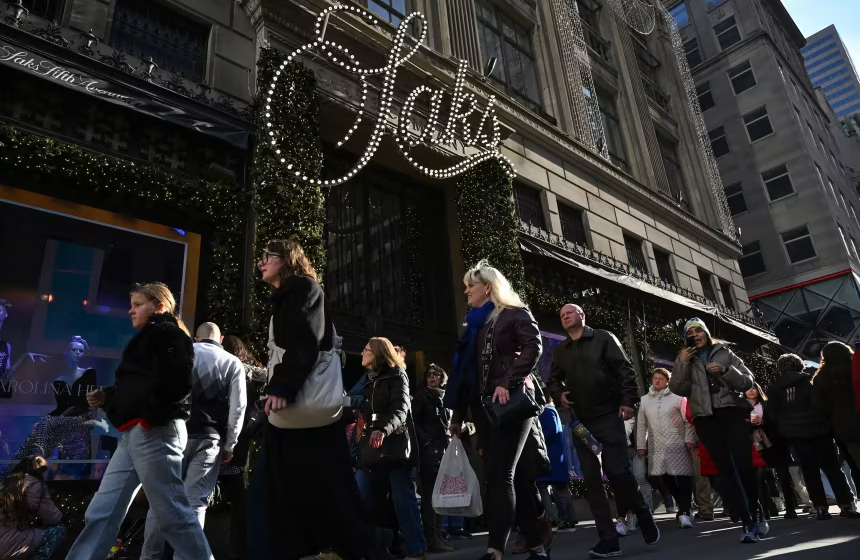

When a luxury retailer reaches the point of bankruptcy, the story is rarely just about balance sheets. It’s about changing behavior how people shop, how they feel about spending, and how quickly trust can erode when economic certainty fades. The filing by Saks Global reflects more than a corporate struggle; it mirrors a broader hesitation spreading through consumer culture.
Luxury shopping has always depended on emotion as much as income. People buy high-end fashion not only because they can afford it, but because it makes them feel secure, confident, and optimistic. When those emotions weaken, even wealthy consumers pause. They delay purchases, reconsider priorities, and question whether indulgence still feels justified.
This is where human behavior becomes critical. Over the past few years, shoppers have grown more cautious. Inflation, market volatility, and global uncertainty have quietly reshaped how people define value. Luxury no longer competes only with other luxury brands it competes with the desire for stability.
Retailers built on tradition and prestige often struggle to adjust to these emotional shifts. Large physical stores, once symbols of aspiration, can start to feel heavy and outdated when foot traffic slows. The experience that once felt exclusive may suddenly feel inefficient in a world where convenience and flexibility matter more than ceremony.
For Saks Global, the pressure appears to have accumulated gradually. Rising costs, complex operations, and evolving consumer expectations created a gap between what the brand offered and what shoppers were emotionally ready to commit to. Bankruptcy, in this sense, is not a sudden collapse it’s the moment when delay is no longer possible.
There’s also a psychological ripple effect. When a well-known luxury name stumbles, it unsettles confidence across the sector. Shoppers start asking questions: If this brand is struggling, what does that say about the market? Investors ask similar questions, reassessing what “resilient” really means in modern retail.
Yet bankruptcy doesn’t always signal an ending. Often, it represents a reset a forced pause that allows companies to strip back assumptions and rebuild around how people actually behave now, not how they behaved a decade ago. The brands that survive are usually the ones that listen closely to shifts in mindset, not just sales data.
This moment highlights a deeper truth about retail: success depends less on legacy and more on adaptability. Consumers evolve emotionally before they change behavior visibly. By the time sales decline, the decision has often already been made internally.
Saks Global’s filing serves as a reminder that even iconic names are vulnerable when confidence wavers. In today’s environment, luxury isn’t defined solely by price or prestige it’s defined by relevance, reassurance, and trust. And those are qualities that must be continuously earned, not assumed.