

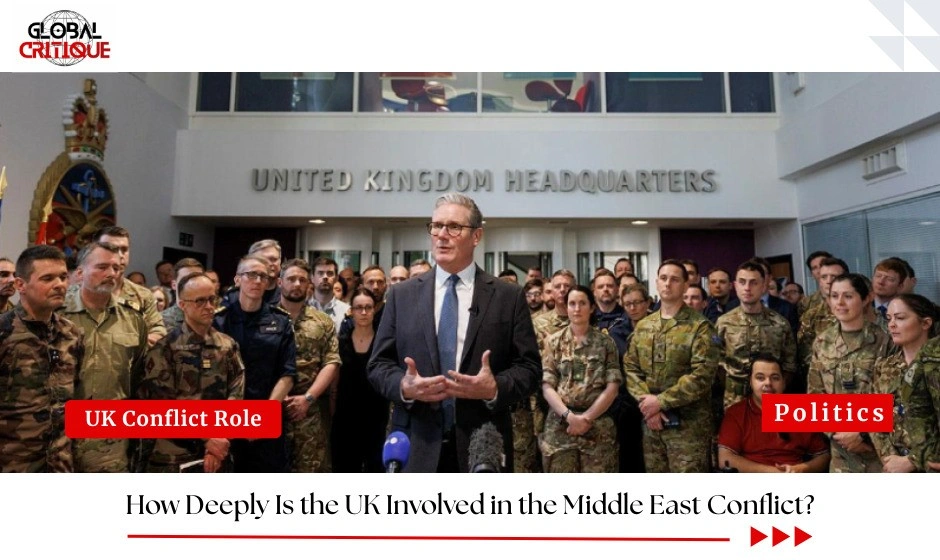

UK Authorises Limited US Use of British Bases in Middle East Conflict
The United Kingdom has taken a more direct step into the Middle East crisis after granting the United States permission to use certain British military bases for what Prime Minister Keir Starmer described as a “specific and limited defensive purpose.” The decision reflects growing pressure from regional tensions and expectations of Iranian retaliation against Western allies.
Starmer acknowledged that British involvement had become difficult to avoid due to alliance obligations and repeated US requests for assistance. His latest stance marks a shift from earlier concerns about the legality of participating in military action connected to the conflict.
UK Military Build-Up Across the Region
In recent weeks, Britain has quietly reinforced its military presence in the Middle East to protect its own installations and support partner nations. Key preparations have focused on safeguarding the RAF base at Akrotiri in Cyprus and strengthening cooperation with Gulf allies.
A joint UK-Qatar air squadron was redeployed from the UK to Qatar earlier this year. The unit was positioned to respond defensively if regional partners came under attack. British aircraft, including Typhoon and F-35 jets stationed in Qatar and Cyprus, are capable of intercepting drones and missiles aimed at allied targets.
Policy Shift After Initial Refusal
The new policy contrasts with an earlier decision in which Starmer declined a US request to use two British-controlled bases RAF Fairford and Diego Garcia for operations linked to strikes on Iran. At the time, legal concerns were seen as a major factor behind the refusal.
However, following escalating hostilities and Iranian attacks on multiple countries across the region, the UK government concluded that allowing US defensive operations from British territory could be justified under international law. Officials argued that preventing missile launches against allied nations constitutes collective self-defence.
Possible Military Missions from British Bases
Defence analysts suggest the most likely scenario involves US heavy bombers operating from RAF Fairford or Diego Garcia to target Iran’s underground missile storage complexes. These heavily fortified facilities, often carved deep into mountainous terrain, house ballistic missiles considered among Iran’s most threatening capabilities.
Striking such sites would require bunker-penetrating munitions delivered by long-range aircraft such as B-2 or B-52 bombers. The strategic location of British-controlled bases makes them attractive staging points compared with launching missions from the continental United States.
Risk of Deeper UK Involvement
Although London has framed its role as limited and defensive. And further escalation could draw Britain more deeply into the conflict. Drone activity has already been reported near the UK’s Akrotiri base, raising the prospect of direct British retaliation if attacks continue.
Military experts also note that Washington may request additional support if its campaign against Iranian military assets expands. By approving base access for defensive strikes, Starmer has signalled a willingness to extend cooperation if it can be justified as protecting allies rather than conducting offensive war.
A Gradual Expansion of Commitment
The UK government continues to emphasise that its involvement is constrained and lawful. Yet the evolving battlefield and ongoing Iranian retaliation against regional partners suggest Britain’s role could grow.
Should attacks intensify or spread. The UK may face mounting pressure to provide further operational support. What began as a limited defensive concession could therefore mark the start of a broader British commitment to the Middle East conflict.