

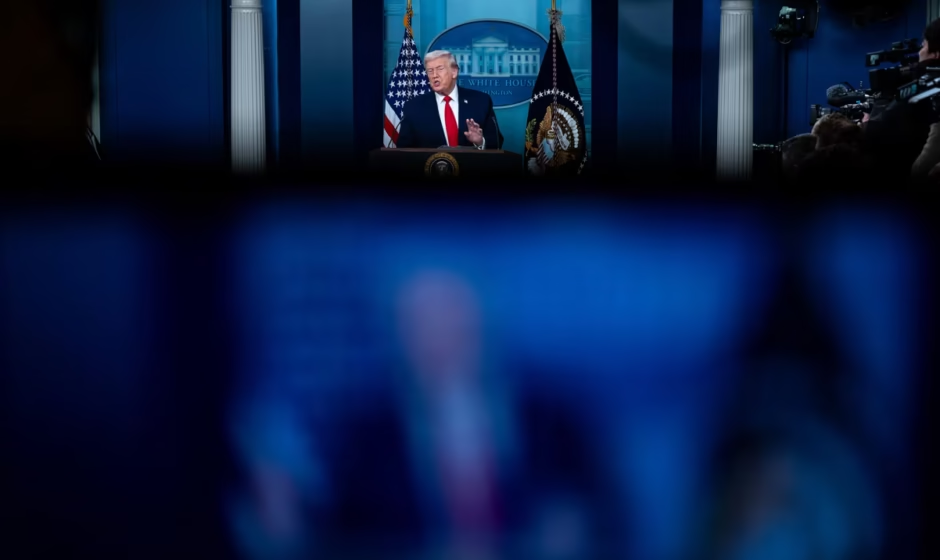

Recent global political manoeuvring around Greenland has shifted sharply from escalatory threats to a tentative de-escalation that could steer world markets away from a full-blown economic conflict. At the centre of this story is the former U.S. president, whose assertive policy toward acquiring Greenland triggered major diplomatic and trade tensions with several European nations.
Earlier efforts by Trump to press for influence over Greenland included announcing punitive tariffs of up to 25% on imports from key European countries unless they conceded on the Arctic territory. Targeted countries, grounded in longstanding alliances and shared economic interests, united in firm opposition, warning that such coercive moves risked damaging relations and could spiral into retaliation. Many European capitals even discussed invoking powerful economic defence mechanisms to counter U.S. pressure and protect their markets and sovereignty.
The pivot came when Trump announced that planned tariffs would be dropped following high-level talks where a preliminary framework for future cooperation around Greenland was outlined. The shift was widely seen as a strategic retreat from brinkmanship, as markets reacted with relief and transatlantic relations found a breathing space. This development followed mounting resistance from NATO allies and global leaders who criticised the notion that economic coercion could achieve geopolitical aims without undermining trust between long-standing partners.
Analysts argue that the initial escalation exposed how economic tools like tariffs can quickly threaten to unravel diplomatic ties when tied to territorial ambitions. Greenland’s strategic position in the Arctic both for security and access to resources heightened the stakes, making it a flashpoint for competing visions of regional influence. Yet, by stepping back from immediate tariff implementation, the former president opened space for dialogue, albeit amid continued scepticism about long-term intentions.
This episode underscores a broader lesson in global economics: using trade instruments as leverage on political goals can provoke defensive alliances and potent countermeasures. By defusing the immediate threat of economic war, political actors have at least momentarily preserved the framework for cooperation, even as deeper questions about sovereignty and strategic interests remain unresolved.