

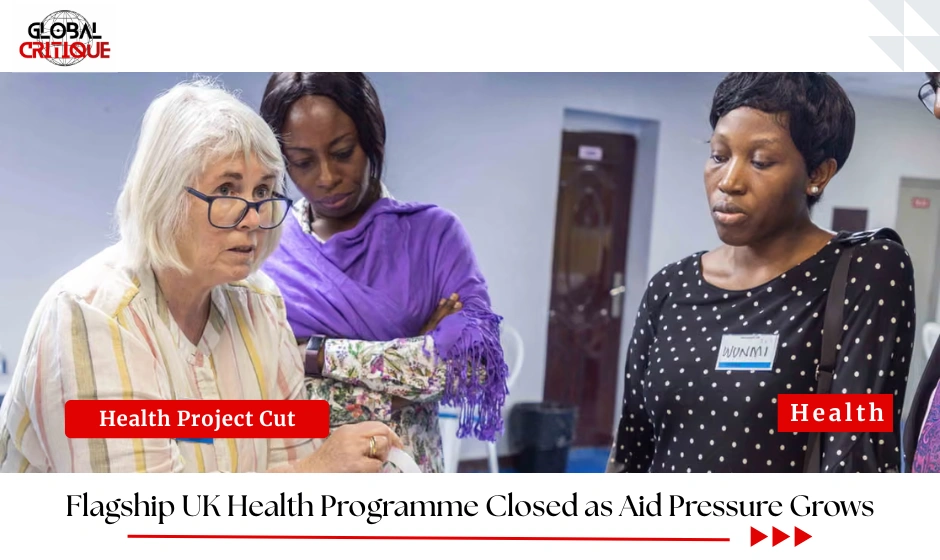

UK Government Ends Flagship Global Health Project After Aid Cuts
The UK government is shutting down its Global Health Workforce Programme. A major international health project that supported health systems in six African countries. The programme was designed to strengthen frontline care. Are improve pandemic readiness, and support long-term health capacity in places including Ghana, Kenya, Nigeria, Ethiopia, Malawi, and Somaliland. The Guardian reported that the project will close by the end of March after cuts to the UK aid budget.
Aid Reduction Drives the Decision
The closure comes after the UK reduced its aid budget to 0.3% of GDP, down from 0.5%, which had already been reduced from the earlier 0.7% target. That funding squeeze has forced difficult choices across overseas programmes. With health now among the areas facing the biggest impact. Recent policy analysis says the UK’s planned aid cuts are among the deepest now being made by major donors.
The Project Was Built Around Health Security
This was not only a development programme. It was also linked to the UK’s own health security goals because stronger overseas health systems can help detect outbreaks earlier and reduce the spread of future disease threats. The Guardian said officials had previously described the scheme as important for both moral reasons and Britain’s broader public health protection.
Experts Warn Progress Could Be Lost
Public health experts and partner organisations say the closure could undo years of work in workforce training, disease response, and essential care. According to the Guardian, those involved fear the loss of stable funding will weaken gains already made in areas such as HIV response and protection for vulnerable groups. A recent Guardian report on aid cuts also said wider reductions could bring serious long term health consequences if support continues to fall.
African Health Systems Face Fresh Pressure
The countries affected by the programme already face major healthcare pressures. From staff shortages to rising public health risks. Ending a long-running workforce programme means local systems may lose training support and operational help at a time when many are still trying to build stronger and more resilient care structures. The concern is not only about funding loss today. But also about what that means for healthcare capacity in the years ahead.
The Move Raises Wider Questions About UK Aid Priorities
The decision also adds to the debate over how Britain now defines the purpose of overseas aid. Health programmes often produce long term results. But they can be vulnerable when budgets tighten and governments shift spending priorities. In this case. The closure of a flagship project may raise new questions about whether short-term savings are being placed ahead of long-term health protection and international stability.