

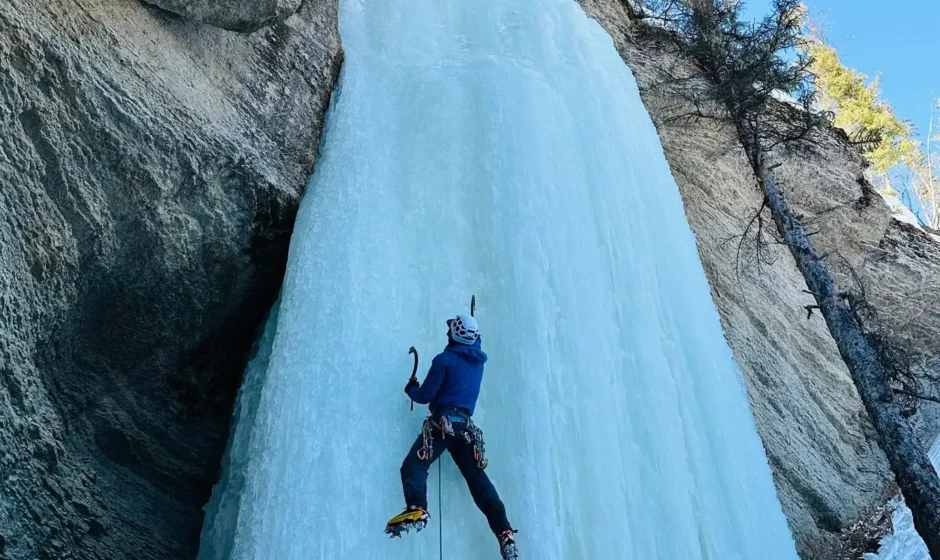

Ice climbing is not a sport that allows distraction. On a frozen waterfall in Wyoming, every movement demands focus, balance, and trust in the equipment, in the guide, and in oneself. For beginners, the experience is less about conquering height and more about learning to stay calm while fear and excitement collide.
The process begins at ground level, where basic technique matters more than strength. Each swing of the ice axe must be deliberate, each step carefully placed into the ice with sharp crampons. The frozen surface is solid but unforgiving, rewarding precision and punishing hesitation. Progress upward happens slowly, one controlled movement at a time.
What surprises many first-timers is the mental shift that occurs once climbing begins. Noise fades, time compresses, and attention narrows to breathing, grip, and rhythm. The climb becomes almost meditative. Fear is present, but it is managed rather than avoided. In this environment, confidence grows not from speed, but from control.
Wyoming’s winter landscape adds to the experience. Towering ice formations, quiet valleys, and subzero air create a setting that feels remote and elemental. Guides play a critical role, offering technical instruction while reinforcing safety and composure. Their calm presence helps climbers replace anxiety with trust.
From an experiential perspective, ice climbing offers something rare: a chance to be fully present. Unlike many adventure activities driven by adrenaline alone, this one rewards patience and mindfulness. Reaching the top is satisfying, but the real achievement lies in the process learning how to move forward while staying grounded.
For those willing to embrace discomfort and uncertainty, ice climbing becomes more than a physical challenge. It turns into a lesson in focus, resilience, and quiet confidence carved into ice, one careful step at a time.