

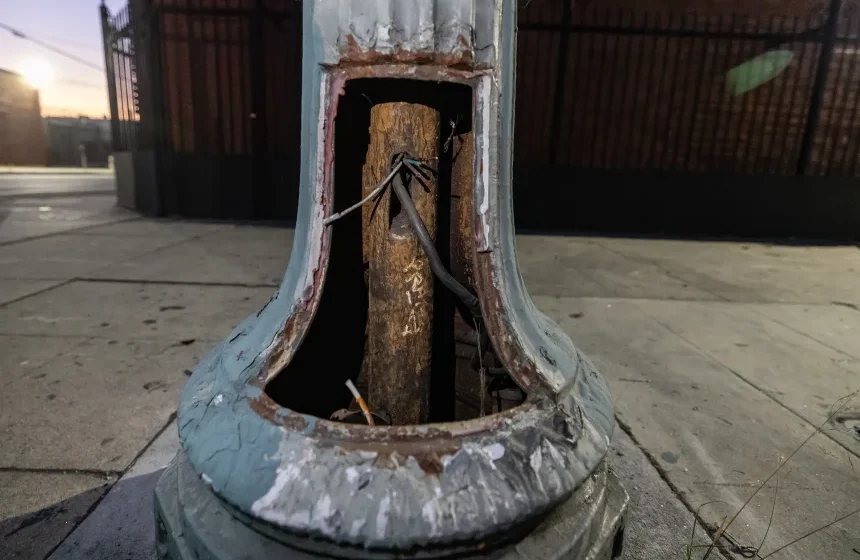

Copper wire theft has emerged as a growing problem across the United States, leading to service disruptions, safety concerns, and costly repairs for telecommunications providers such as AT&T. While copper has long been a valuable commodity due to its widespread use in infrastructure, the surge in theft is now having serious consequences for consumers and communities.
Telecommunications networks rely heavily on copper wiring to support phone lines, internet connections, and emergency communication systems. When these cables are stolen or damaged, entire neighborhoods can lose service for extended periods. In some cases, outages affect not only residential customers but also businesses, hospitals, and public safety agencies that depend on reliable connectivity.
AT&T and other providers report that copper theft incidents often result in sudden and widespread outages, particularly in rural or underserved areas where alternative infrastructure is limited. Repairs can take days or even weeks, as replacing stolen wiring requires specialized crews and coordination with local authorities. During this time, customers may be left without phone or internet access, increasing frustration and potential risk.
One of the reasons copper theft has become more prevalent is the rising value of scrap metal. Thieves can sell stolen copper quickly for cash, often with little traceability. However, the damage caused far outweighs any short-term profit. Beyond service outages, copper theft can disrupt emergency services, disable traffic signals, and compromise alarm systems, posing real dangers to public safety.
Telecommunications companies are responding with a range of measures. These include increased surveillance, partnerships with law enforcement, and replacing copper lines with fiber-optic cables where possible. Fiber is less attractive to thieves and offers faster, more reliable service, but upgrading infrastructure is expensive and time-consuming.
Lawmakers and industry leaders are also calling for stricter penalties and improved regulation of scrap metal sales to deter theft. Some states have already introduced tighter reporting requirements for scrap dealers, but enforcement remains uneven.
Ultimately, copper wire theft highlights the vulnerability of critical infrastructure and the need for long-term solutions. As demand for connectivity continues to grow, protecting communication networks is essential not only for convenience but for safety, economic stability, and emergency response. Addressing the root causes of copper theft will require cooperation between telecom companies, governments, and local communities to ensure reliable access to essential services.