

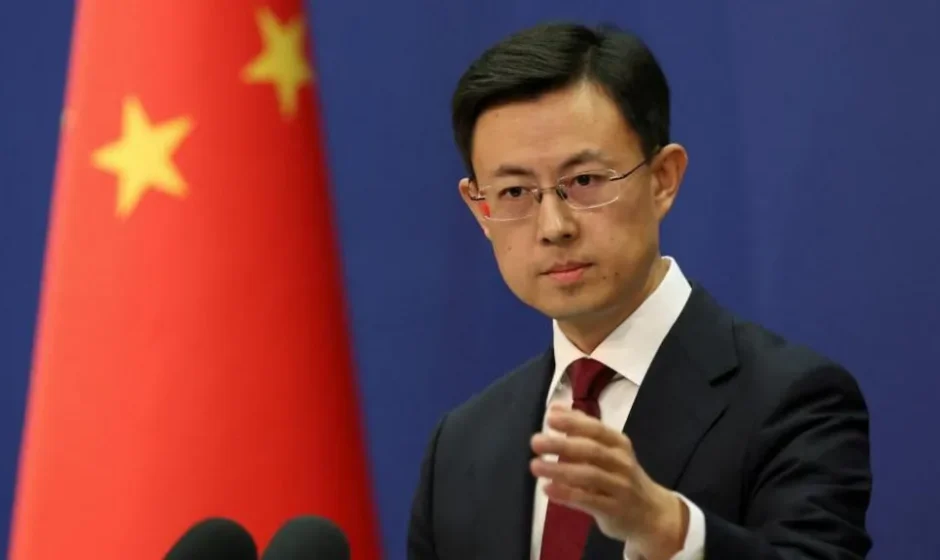

China has pushed back against claims that its growing economic engagement with Canada is aimed at the United States, following a sharp tariff warning from Donald Trump. The response signals an effort to cool tensions while defending what Beijing describes as independent and commercially driven cooperation between sovereign nations.
The dispute emerged after Trump threatened severe trade penalties if Canada deepened economic ties with China, framing such cooperation as a challenge to US interests. China’s reaction was swift but measured, stressing that agreements with Canada are not designed to target any third country. From an analytical perspective, this language reflects a broader attempt to de-escalate while maintaining strategic flexibility.
For markets, the episode underscores how trade relationships are increasingly interpreted through a geopolitical lens. Canada’s efforts to diversify trade partners are rooted in economic resilience, yet they now carry political risk as global power competition intensifies. The possibility of punitive tariffs introduces uncertainty for exporters, supply chains, and investors who rely on predictable cross-border rules.
China’s position also highlights a familiar pattern. Rather than directly confronting tariff threats, it emphasizes neutrality and mutual benefit, placing the burden of escalation elsewhere. This approach allows Beijing to preserve economic momentum while avoiding the appearance of provocation a tactic often used to stabilize sentiment during periods of heightened rhetoric.
From a policy analysis standpoint, the situation illustrates how trade has become a tool of alignment rather than exchange. Allies are increasingly pressured to choose sides, even when economic logic points toward diversification. Such pressure can distort decision-making and reduce efficiency across global markets.
While immediate consequences remain unclear, the messaging alone has impact. Even without action, tariff threats can delay investment and shift risk assessments. As global trade continues to fragment along political lines, episodes like this reinforce a growing reality: trade policy is no longer just about economics it is about influence, leverage, and strategic signaling.