

UK Businesses Seek Closer Ties with Europe Amid Tariff Uncertainty
British companies are increasingly exploring stronger trade links with Europe as uncertainty over U.S. tariffs continues, according to business groups. The shift comes after U.S. President Donald Trump announced a sweeping 15% tariff on all imports over the weekend, following a Supreme Court ruling that struck down previous levies.
The new tariffs represent a 50% increase on the level agreed in last year’s UK-U.S. trade deal, making the UK one of the nations most affected, according to analysis by think tank Global Trade Alert.
Government Talks and Ongoing Discussions
While U.S. Trade Representative Jamieson Greer emphasized that the administration “expects” to honour existing trade agreements, the UK government is reported to be in ongoing discussions with its American counterparts to clarify the situation.
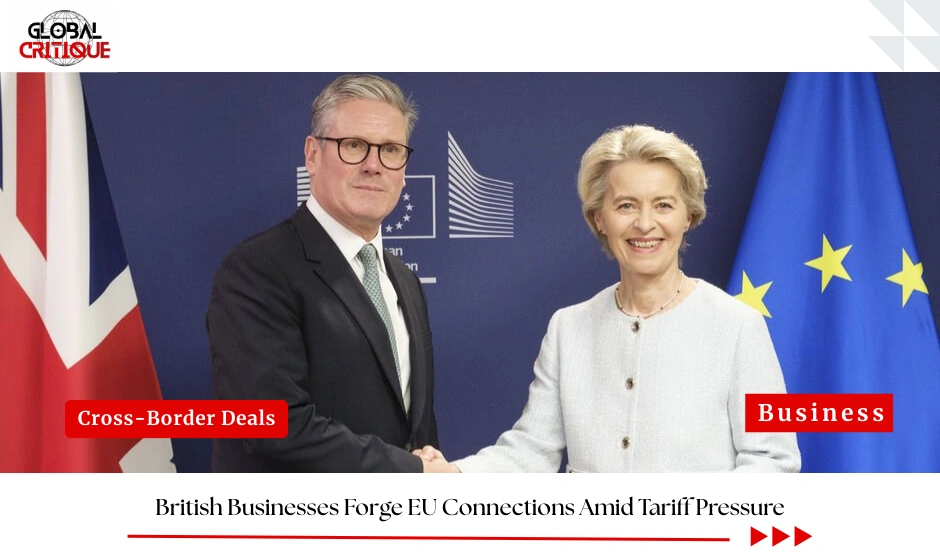
The uncertainty surrounding U.S. trade policy is prompting UK businesses to seek more predictable partnerships. Many are now looking toward closer alignment with the European Union and European countries, hoping to secure stable trading conditions.
Uncover the banker connection in newly released Epstein records
Businesses Seek Stability
“There is little certainty or consistency, and companies are understandably cautious,” said William Bain, head of trade policy at the British Chambers of Commerce (BCC), which represents 50,000 businesses. “Many are exploring alternative options, including increased trade with Europe or the Indo-Pacific region, where risks appear lower.”
The BCC estimates that the tariff increase could raise the cost of UK. It exports by between £2 billion and £3 billion over the next year. Many firms with long-term supply contracts are concerned about unpredictable price fluctuations.
Sectoral Impact and EU Preference
The sectors most likely to be affected if the new tariffs take effect on February 24 include food and drink, clothing and footwear, and electrical and industrial goods. While the majority of previously negotiated tariffs on cars, steel, and pharmaceuticals are expected to remain unchanged, discussions are ongoing.
Emma Rowland, trade policy advisory at the Institute of Directors (IoD). And said that UK business leaders generally support the government’s balanced approach to international trade. “However, if prioritisation were necessary, most businesses would favour closer ties with the EU over the U.S.,” she said.
Looking Ahead
As the UK navigates the shifting global trade environment. Firms are actively seeking stability and predictable markets. Stronger alignment with Europe is increasingly viewed as a hedge against unpredictable U.S. tariffs, ensuring continuity for UK exporters in a volatile trading landscape.
Stay informed with expert insights, market trends, and corporate news.