

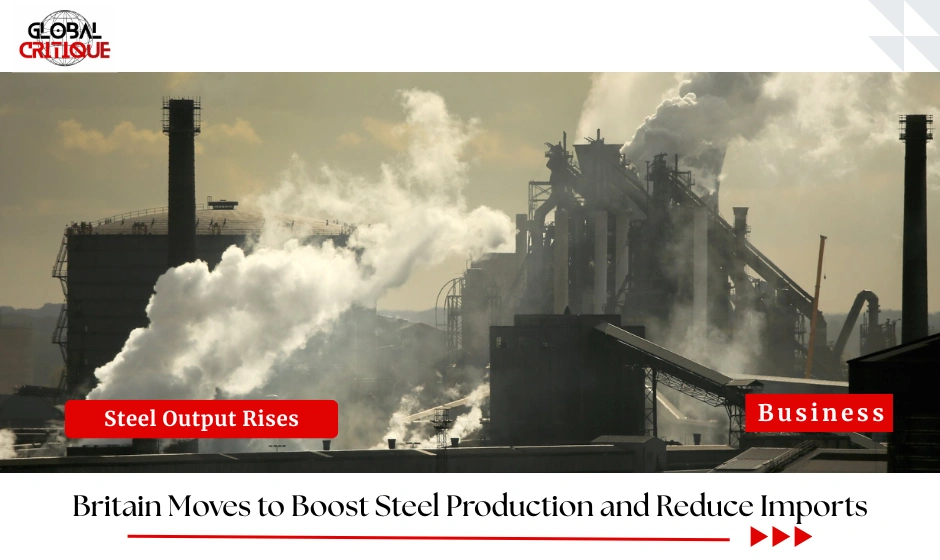

UK Targets Higher Steel Output as Import Cuts and Tariffs Tighten
The UK has set a new goal for half of the steel used in the country to be made domestically, up from about 30% now. To support that push, the government plans to cut tariff-free import quotas by 60% From July 1 and raise the tariff on steel brought in above that level to 50%, up from 25%. The wider strategy also includes up to £2.5 billion in support through the National Wealth Fund.
The Target Marks a Big Shift in Industrial Policy
This move shows a much more protective approach to the steel sector than the UK has taken in recent years. The plan is meant to reduce dependence on imported steel, support local plants, and give the industry a clearer long-term direction at a time when high energy costs and global oversupply have kept pressure on domestic producers.
Import Curbs Will Start in July
The import side of the strategy is one of the biggest changes. From July, the volume of steel allowed into the UK without tariffs will be sharply reduced, while steel brought in above that quota will face a much steeper duty. The government is also moving closer to the tougher trade stance already seen in the US and EU as global oversupply continues to weigh on prices.
The Plan Is Also About Saving British Capacity
The steel industry is a small part of UK GDP. But it still supports around 37,000 jobs and remains important for infrastructure, manufacturing. And strategic industrial capacity. The government has already spent heavily to keep major plants operating, and the new strategy is designed to stop further decline while backing a greener transition.
Green Steel Investment Sits at the Centre
Alongside tariffs, the strategy points toward more investment in electric arc furnaces and stronger domestic scrap supply chains. The official plan says a new cross-government working. The group will be formed by May 2026 to improve scrap availability and quality for UK steelmaking. Which matters because recycled steel is expected to play a bigger role in future production.
Manufacturers May Face a More Mixed Outcome
While domestic steelmakers are likely to welcome stronger protection. Some downstream manufacturers could face higher input costs if imported semi-finished steel becomes more expensive. That means the policy may help primary producers while creating pressure for firms that rely on cheaper imported supplies.
The Bigger Test Will Be Execution
The strategy gives the industry a stronger headline target, but the real question is whether investment, lower imports, and green transition plans can work together without creating fresh pressure elsewhere in manufacturing. If the government can stabilise output and modernise production. The sector may regain some ground. If not, the UK could still face the same old problem of high costs and limited competitiveness despite tighter trade protection. This final point is an editorial inference based on the announced target, tariff plan, investment commitment, and known cost pressures.