

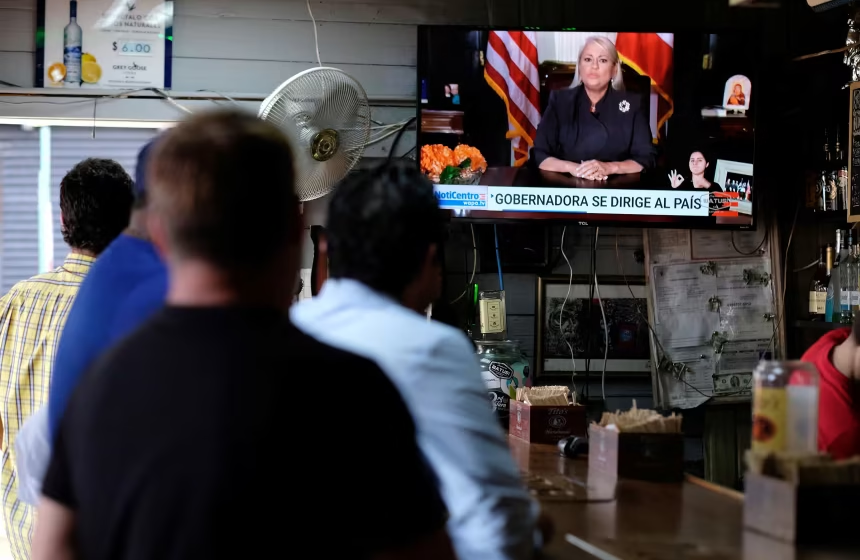

The decision by President Donald Trump to grant a pardon to former Puerto Rico governor Wanda Vázquez Garced has reignited a familiar and deeply divisive debate in American politics: where does presidential authority end, and where does accountability begin?
Wanda Vázquez, who served as Puerto Rico’s governor from 2019 to 2021, became a central figure in federal investigations after admitting guilt to a campaign finance violation tied to her 2020 election effort. The case, which initially included broader allegations related to corruption and illicit political influence, ultimately resulted in a plea agreement that narrowed the charges. Even so, her conviction marked a historic moment — she was the first former governor of Puerto Rico to plead guilty to a federal crime.
Trump’s decision to intervene now has drawn sharp reactions across the political spectrum. Supporters of the pardon argue that the prosecution was excessive and politically motivated, pointing to the timing of the investigation and Vázquez’s past political alignment. Critics, however, see the move as another example of presidential power being used to shield political allies, potentially weakening public trust in the justice system.
The controversy is not just about one individual. It reflects a broader concern over how pardons are used — whether they serve as a safeguard against injustice or become a tool for rewarding loyalty. While the U.S. Constitution grants presidents wide latitude in issuing pardons, each high-profile case brings renewed scrutiny, especially when it involves elected officials and corruption-related offenses.
For Puerto Rico, the situation carries additional weight. The island has endured years of political instability, economic hardship, and public frustration with leadership scandals. Many residents see accountability as essential to restoring confidence in governance. A presidential pardon, while legally valid, risks reopening wounds and reinforcing perceptions that powerful figures operate under a different set of rules.
At a national level, the pardon fits into a larger pattern that has characterized Trump’s approach to executive authority — one that often challenges institutional norms and provokes debate over the balance between law and politics. Whether viewed as corrective justice or political favoritism, the decision underscores how presidential actions can ripple far beyond the individuals involved.
Ultimately, the case raises a question that continues to define modern American politics: can faith in democratic institutions survive when justice appears entangled with power?