

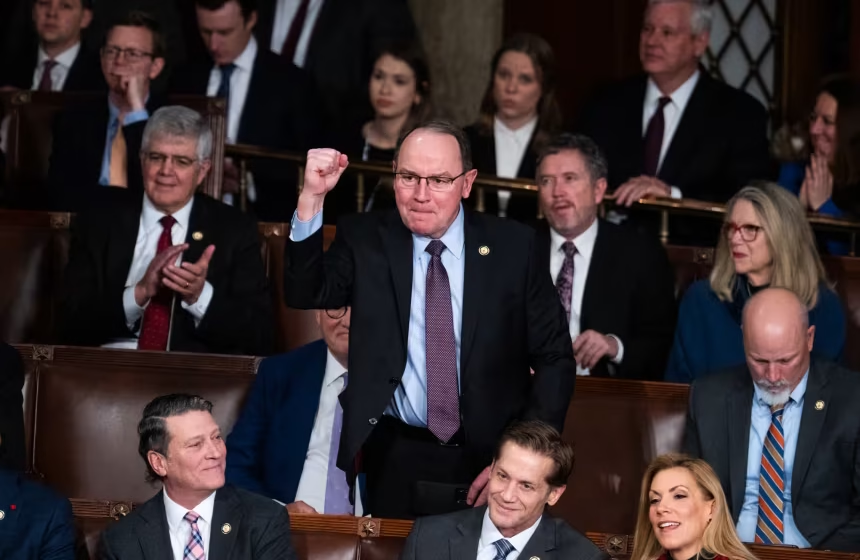

As the current congressional term comes to a close, a significant number of U.S. lawmakers are preparing to leave Congress, marking one of the most notable periods of turnover in recent years. The departures — driven by retirements, election losses, and career changes — are reshaping the makeup of Capitol Hill and raising questions about experience, leadership, and institutional memory.
Lawmakers leave Congress for many reasons, but several common themes stand out. Some are stepping away after long careers, citing burnout, family considerations, or a desire to pursue life outside of politics. Others are exiting after losing reelection bids or deciding not to run again in increasingly competitive or polarized districts. Together, these factors point to the growing pressures of serving in a deeply divided political environment.
One of the most immediate effects of this turnover is the loss of seniority and expertise. Veteran lawmakers often play critical roles on key committees, where experience and relationships help shape legislation. When long-serving members depart, leadership dynamics shift, and newer lawmakers must quickly adapt to complex policy processes.
The departures also reflect broader political trends. Increased polarization, nonstop media scrutiny, and the demands of fundraising have made congressional service more challenging. For some lawmakers, the constant cycle of campaigning and governing has become unsustainable. Others see greater influence or stability outside elected office, whether in the private sector, advocacy work, or public service roles.
At the same time, turnover opens the door for new voices and perspectives. Open seats create opportunities for first-time candidates, younger lawmakers, and individuals from more diverse backgrounds to enter Congress. While inexperience can pose challenges, fresh perspectives can also lead to new policy ideas and shifts in legislative priorities.
Geographically, departures are not evenly distributed. Some states and districts are experiencing particularly high turnover, which can alter political balance and local representation. Constituents may face a learning curve as new lawmakers take office and establish their roles.
From an institutional standpoint, frequent turnover raises questions about continuity. Congress relies heavily on informal norms, relationships, and procedural knowledge. When many members leave at once, the body risks losing cohesion and efficiency, especially during periods of major policy debate.
Ultimately, the wave of lawmakers leaving Congress underscores a period of transition in American politics. It reflects both the personal toll of public service and the evolving nature of political careers. As new members prepare to take their seats, the challenge will be balancing renewal with stability — ensuring that fresh energy strengthens, rather than disrupts, the work of governing.
The changing face of Congress serves as a reminder that political institutions are shaped not only by elections, but by the people who choose when to stay — and when to step aside.