
UK Faces High Risk of Future Respiratory Disease Outbreaks
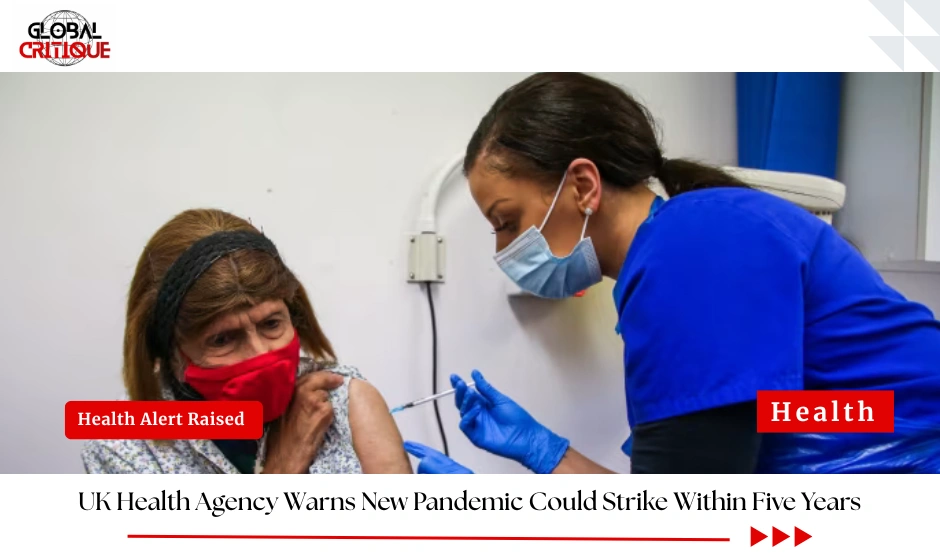
The UK Health Security Agency came out with a pretty stark warning recently: respiratory diseases are, in their view, the most serious health threat the country is going to face over the next five years. Their first ever Health Security Risk Assessment put the chances of a major flu or coronavirus pandemic at over 25 percent in that same window. One in four odds. That’s not the kind of statistic you brush off.
A First of Its Kind Report
Nobody had put together a report quite like this before, at least not through the UKHSA. The whole idea was to take every credible health threat on the table, stack them up against each other, and work out which ones could do the most damage and how realistically they might happen. Officials were upfront that this isn’t meant to be a prediction of the future. It’s a planning document, something to work from, not something to panic about.
A New Flu Strain Could Leave Millions Sick
The scenario that jumps out most is a new flu strain landing in the UK. If that happened, the report suggests more than half the population could end up getting symptoms across a two year period. Roughly four percent of that group might need hospital treatment and when you think about what that looks like in practice wards filling up, doctors and nurses getting sick themselves, staff being pulled off other duties to handle the surge it starts to sound a lot like what happened with COVID-19. Because honestly, it would be.
Mosquitoes Could Become a Bigger Problem Than People Expect
This part of the report tends to get overlooked but it’s worth paying attention to and the Asian tiger mosquito, which can carry dengue fever, could end up settling in parts of southern England and London if temperatures keep climbing across Europe. Right now that feels distant. But the experts aren’t dismissing it; they’re saying the risk could grow considerably as the climate shifts. Dengue fever being transmitted locally, not just brought in by travellers, is something the UK hasn’t had to deal with before.
Fewer Kids Getting Vaccinated and the Numbers Are Starting to Show It
Vaccination coverage for measles, mumps, rubella, and chickenpox has dropped below the WHO’s recommended levels. That’s not a minor administrative issue; the UK has actually lost its measles elimination status because of it. If the trend keeps going in the same direction, the worst case scenario the report outlines involves around 160,000 cases of these illnesses in a single year and the hospitals are already under pressure most of the time. That kind of additional load would hit hard.
FAQs (Frequently Asked Questions)
What is the UK Health Security Risk Assessment?
It’s the UKHSA’s first national report that looks at the full range of health threats facing the UK, ranks them by likely impact, and is built to improve how the country prepares for future health emergencies.
What came out as the biggest threat?
Respiratory infections mainly the risk of a major flu or coronavirus pandemic ranked highest across the next five years.
What are the actual odds of another pandemic?
The UKHSA puts it at above 25 percent within five years. Higher than most people probably assumed.
Could mosquito-borne diseases actually spread in the UK?
It’s a growing risk. Warmer conditions could allow the Asian tiger mosquito to establish itself in parts of southern England and London, which could eventually lead to local transmission of diseases like dengue fever.
Why does it matter that vaccination rates are falling?
Lower coverage means diseases like measles can circulate more freely. The UK has already lost its measles elimination status, and if rates keep dropping, the report suggests up to 160,000 cases of preventable illnesses could occur in a single year.
Is the report saying another pandemic is definitely coming?
No. It’s laying out realistic worst case scenarios to help with planning, not making firm predictions about what will happen.
Why does early preparation actually make a difference?
Because health emergencies don’t wait for systems to catch up. Having solid plans already in place means faster, more effective responses when something does hit and less damage overall
Stay informed on emerging health risks and pandemic preparedness updates with Global Critique.