

UK Ukraine Loan Scheme Signals Strategic Return as Britain Rebuilds EU Influence
Britain Moves Closer to Europe as Ukraine Funding Plan Gains Momentum
The UK Ukraine loan scheme is shaping into a decisive geopolitical shift rather than a simple financial move.
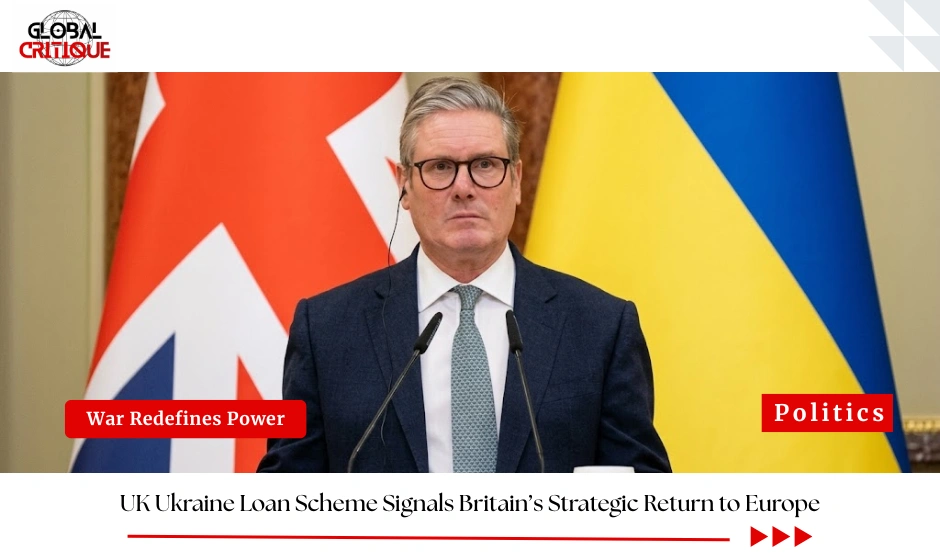
Prime Minister Keir Starmer has indicated support for a European-backed Ukraine funding plan, aligning Britain with EU efforts to sustain Kyiv’s war economy. According to BBC News, European leaders are actively exploring ways to mobilize tens of billions of euros using profits generated from frozen Russian central bank assets.
This positions the UK not just as a supporter of Ukraine, but as an active participant in Europe’s evolving financial and strategic framework.
What Happened: UK Signals Support for European Financing Strategy
The debate around the UK Ukraine loan scheme intensified after Starmer confirmed that participation would strengthen ties with European partners.
The proposed mechanism involves leveraging immobilized Russian assets estimated at over €200 billion held across Western jurisdictions to generate funding streams for Ukraine’s reconstruction and military support.
According to European Commission discussions, this initiative is designed to provide long-term, sustainable financing, rather than short-term aid packages.
By backing this approach, Britain is effectively aligning itself with EU fiscal strategy despite being outside the bloc.
Timeline: From Brexit Isolation to War-Driven Realignment
To understand the significance of the European loan initiative, the timeline matters.
- 2020: Brexit formally separates the UK from EU decision-making
- 2022: Russia invades Ukraine, forcing Europe into a unified security stance
- 2023–2026: EU expands coordinated financial and military support for Kyiv
During this period, the UK remained a key military ally to Ukraine but operated independently from EU financial mechanisms.
Now, the situation is shifting.
War has accelerated European integration
And Britain is moving closer to that system again
The Real Strategy: Influence Without Membership
The deeper significance of the UK Ukraine loan scheme lies in how Britain is repositioning itself.
By aligning with EU-backed financing structures, the UK gains indirect influence over European fiscal coordination, despite no longer being part of EU institutions.
This approach allows Britain to:
- shape funding priorities
- strengthen diplomatic ties
- remain relevant in European decision-making
It is a calculated strategy: influence without formal membership.
Power Players Driving the Shift
This geopolitical move is being shaped by multiple actors:
- Keir Starmer, redefining Britain’s European strategy
- European Commission, coordinating funding mechanisms
- International Monetary Fund (IMF), monitoring Ukraine’s financial sustainability
- Ukrainian leadership, dependent on continuous funding flows
- Russia, indirectly influencing Western alignment through ongoing conflict
Each player is contributing to a system where financial tools are becoming instruments of geopolitical power.
Strategic Angle: Financial Alignment as Political Leverage
The European loan initiative is not just economic policy, it is strategic leverage.
By participating, Britain:
- strengthens its position in European security discussions
- rebuilds trust lost during Brexit negotiations
- aligns itself with long-term EU policy direction
This reflects a broader shift in UK foreign policy, where financial cooperation is being used to rebuild strategic ties with the European Union.
The battlefield is no longer just military, it is financial and institutional.
Global and UK Impact: Opportunities and Risks
Global Impact
- Reinforces Western unity against Russia
- Creates a structured funding model for Ukraine
- Signals long-term commitment to the conflict
UK Impact
- Improves EU diplomatic relations
- Expands influence in European policy decisions
- Strengthens role in global security architecture
However, the move is not without criticism.
Some analysts argue that deeper financial alignment with the EU could reduce Britain’s independent policy flexibility, especially in future economic decisions.
Others question the long-term financial burden on UK taxpayers if commitments expand.
This creates a balancing act between influence and autonomy.
What Happens Next: A Defining Test for Britain’s Role
The future of the Ukraine funding plan depends on implementation and political consensus.
Key scenarios include:
- Full participation → stronger UK-EU integration and influence
- Limited involvement → symbolic alignment without major impact
- Withdrawal or delay → continued strategic distance from EU core
The decision will shape Britain’s geopolitical position for the next decadeficance of the UK-Ukraine loan scheme lies
Conclusion
The UK Ukraine loan scheme reflects a broader transformation in global politics.
Financial systems are now being used as tools of influence, alliance-building, and long-term strategy.
For Britain, this is a turning point:
Remain an external actor
Or re-engage as a strategic European partner
The current direction suggests that the UK is choosing influence even if it means operating within a framework it once left behind.
Editor’s Insight
This is not a return to the European Union but it is a return to European strategy. Britain is finding a new way to stay inside the power structure without formally rejoining it.