

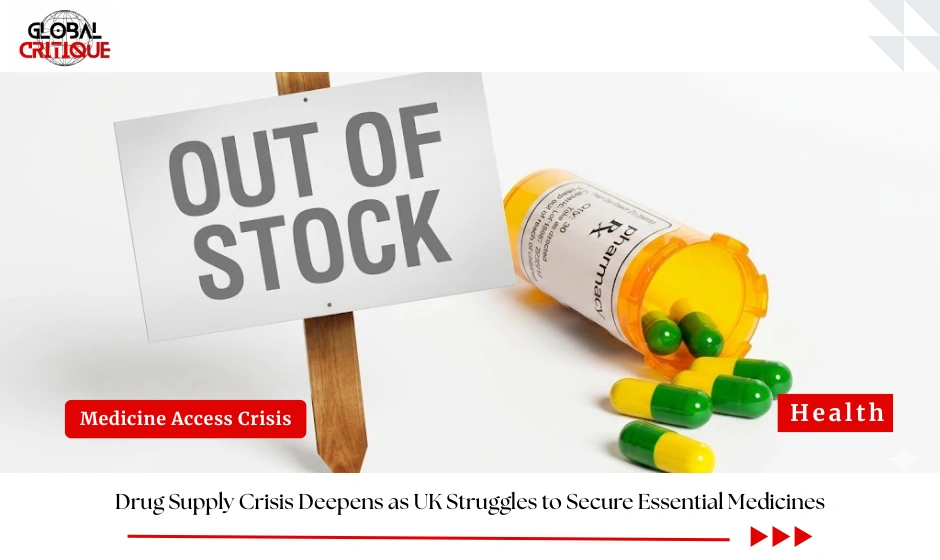

UK Medication Shortage Deepens as Supply Crisis Exposes System Pressure
Britain Faces Growing Access Crisis for Medicines
The UK medication shortage is intensifying, with patients across the United Kingdom struggling to access essential drugs.
What was once a temporary disruption is now turning into a structural crisis affecting healthcare delivery nationwide.
What Happened: Shortages Expected to Worsen
The UK medication shortage is projected to get worse as supply disruptions continue across pharmacies and hospitals.
Patients are already facing delays, substitutions, or complete unavailability of key treatments.
Demand ↑ → supply gaps → healthcare strain
Past Context: Years of Pressure on Supply Chains
The UK medication shortage did not appear overnight.
Brexit-related trade barriers, pandemic disruptions, and rising global demand have gradually weakened the pharmaceutical supply system.
Over time, these pressures have exposed vulnerabilities in how medicines are sourced and distributed.
Core Reason: Cost Pressures and Global Competition
The main driver behind the UK medication shortage is economic pressure within the system.
Low pricing policies reducing supplier incentives
Rising manufacturing costs globally
Competition from larger markets like the US and EU
This is no longer just a supply issue, it is a pricing and power imbalance in global pharma markets.
Power Players Controlling the Crisis
The UK medication shortage is shaped by key actors:
- Keir Starmer → overseeing national policy direction
- NHS procurement systems → controlling drug purchasing
- Pharmaceutical companies → deciding where to supply
- Global markets → competing for limited production
This is a conflict between cost control and supply security.
Strategic Angle: Healthcare vs Market Reality
The UK medication shortage reveals a deeper strategic failure.
This is no longer just a healthcare problem, it is now a national resilience issue.
Countries with stronger pricing power and incentives are securing supply first, leaving the UK exposed.
Global and UK Impact
The UK medication shortage carries serious consequences:
- Increased pressure on NHS services
- Delayed treatments and patient risk
- Rising political pressure on government
- Greater dependence on global supply chains
Weak supply → health risk → political fallout
Endgame View
The UK medication shortage shows how healthcare systems are directly shaped by global economic forces.
Without structural reform, shortages may become a permanent feature rather than a temporary crisis.
Because in today’s world, access to medicine is not just about healthcare it is about who controls supply, pricing, and global priorities.