

UK Economic Uncertainty 2026 Deepens as Global Pressures and Domestic Weakness Collide
Britain Faces Expanding Economic Risks
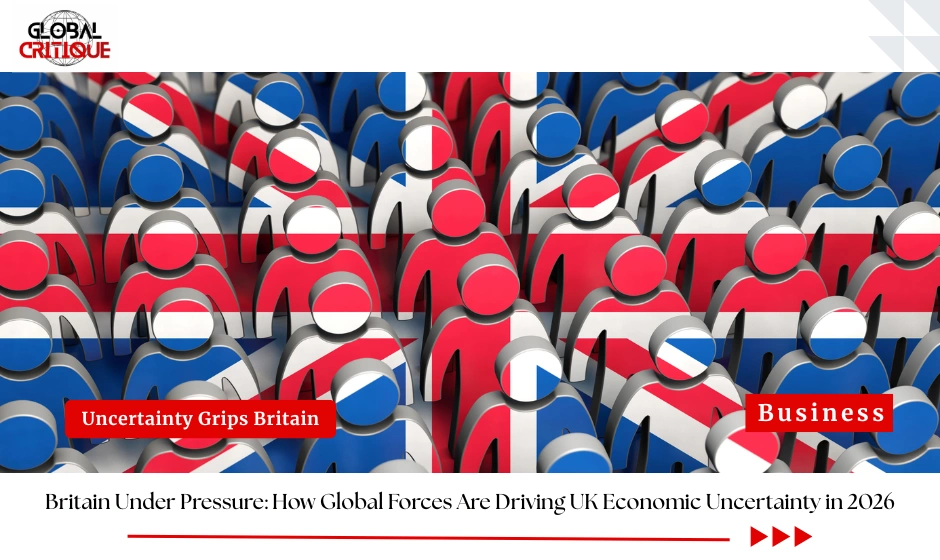
The UK economic uncertainty 2026 is widening rapidly, with multiple risks converging at the same time.
From inflation pressures to global geopolitical instability, the UK economy is entering a phase where direction is no longer clear, and control is increasingly fragile.
What Happened: A Growing Web of Risks
Recent analysis highlights that the UK economic uncertainty in 2026 is no longer tied to one issue.
Instead, it is being driven by a combination of weak growth, persistent inflation, and external shocks.
Growth slowing
Prices still high
Global risks increasing
This creates a highly unstable economic environment.
Past Context: From Crisis to Fragile Recovery
The UK economy has been under pressure since the post-pandemic period, followed by energy shocks and aggressive interest rate hikes.
While there were signs of stabilization, the UK economic uncertainty 2026 shows that recovery was never fully secured.
Core Reason: Structural Weakness Meets Global Instability
The real driver behind the UK economic uncertainty 2026 is a mix of internal weakness and external pressure.
Domestic issues: low productivity, high borrowing costs
External threats: geopolitical tensions, especially around the Strait of Hormuz
This is no longer just an economic slowdown; it is now a strategic vulnerability.
Power Players Shaping the Outcome
The UK economic uncertainty 2026 is being influenced by key decision-makers:
- Keir Starmer → facing pressure to stabilize growth
- Donald Trump → shaping global trade and geopolitical tone
- Central banks → controlling interest rates and liquidity
- Energy producers → impacting global inflation
These actors determine how deep the crisis could go.
Strategic Angle: UK Caught Between Forces
The UK is now positioned between global economic shifts and domestic fragility.
Dependent on global trade
Exposed to energy price shocks
Limited policy flexibility
The UK economic uncertainty 2026 shows Britain is reacting to global forces rather than controlling them.
Global and UK Impact
The consequences of the UK economic uncertainty 2026 are significant:
- Businesses delay investment
- Consumers reduce spending
- Markets remain volatile
- Policy decisions become more cautious
Uncertainty → hesitation → slower growth
Final Take
The UK economic uncertainty 2026 is not a temporary phase; it reflects a deeper shift in economic power and stability.
Britain is now navigating a landscape where global events shape domestic outcomes more than ever.
The real question is no longer whether the UK can grow but whether it can regain control of its economic direction.