


British MP Calls for Caution in UK’s Role Amid Middle East Tensions
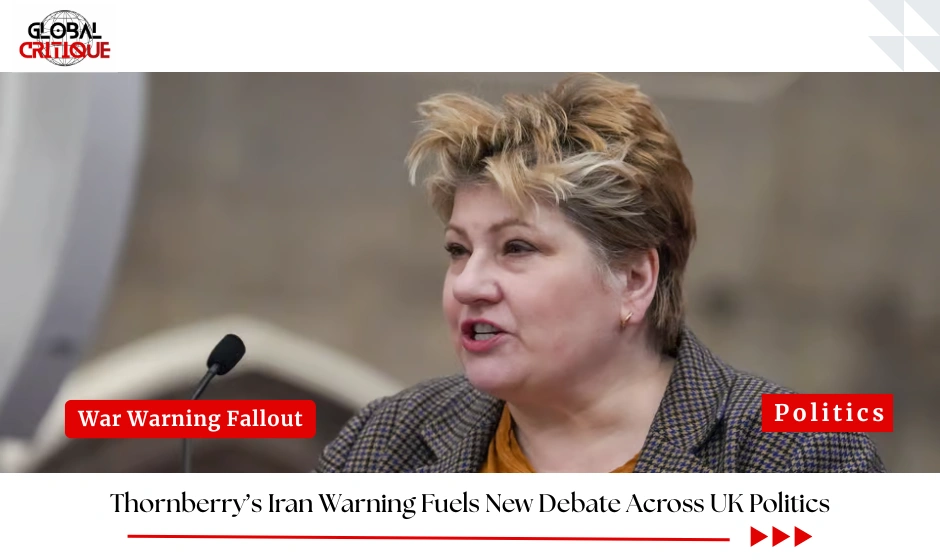
A senior British politician has warned that the United Kingdom must strictly follow international law when responding to the growing conflict involving Iran. Emily Thornberry, chair of the UK Parliament’s Foreign Affairs Committee, said Britain should avoid actions that lack a clear legal basis and must remain cautious about being drawn into escalating military tensions in the Middle East. Her comments come as global concern rises after recent US and Israeli strikes targeting Iranian sites.
Thornberry stressed that the UK should not participate in any military operation unless it is fully justified under international law and directly related to national defence. According to her, respecting legal frameworks is essential not only for Britain’s global credibility but also for maintaining stability in an already fragile region.
Questions Over the Legality of Recent Strikes
The debate intensified after coordinated strikes by the United States and Israel against Iranian targets triggered retaliatory threats and wider regional tension. Thornberry argued that it is difficult to see a clear legal justification for such actions if there was no immediate threat. She said that without evidence of imminent danger, military strikes risk violating international law and could destabilise the region further.
She also pointed out that the United Kingdom was not directly involved in the strikes and suggested that this restraint was the correct approach. Many analysts believe that involvement without clear legal backing could damage the UK’s diplomatic standing and create additional security risks.
Risk of Wider Regional Escalation
The situation remains unpredictable, with concerns that Iran could retaliate against Western military bases across the Middle East. Britain has military personnel and facilities in several Gulf countries, including Bahrain, Qatar, and the United Arab Emirates. Thornberry warned that if those bases were targeted, the UK might be forced to respond defensively.
Such a scenario could draw Britain deeper into the conflict, something many political leaders and security experts want to avoid. The possibility of attacks on shipping routes, oil infrastructure, and military positions has also raised fears of a wider regional crisis.
Pressure on the UK Government
The issue has sparked debate within British politics about how the government should respond to the escalating situation. While some political figures support standing firmly with allies like the United States and Israel, others insist that Britain must prioritise international law and diplomacy.
Thornberry has urged the government to openly challenge actions that may breach international law and to focus on diplomatic solutions rather than military escalation. She believes that a clear legal and strategic framework is essential before any British involvement in the conflict.
A Cautious Path Forward
As tensions continue to rise in the Middle East, the UK government faces increasing pressure to balance its alliances with its commitment to international law. Thornberry’s warning highlights the importance of maintaining legal accountability in global conflicts and avoiding decisions that could drag Britain into another prolonged war.
For now, the government has emphasised the protection of British citizens and military personnel in the region while carefully monitoring developments. However, the debate over legality, diplomacy, and military strategy is likely to remain a central issue in UK politics as the Iran crisis unfolds.