

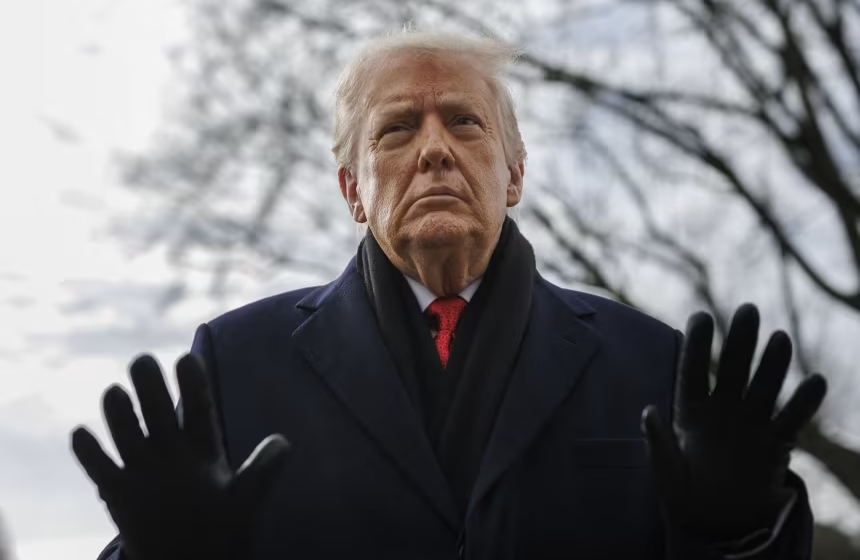

The United States is publicly weighing a significant military strike against Iran after diplomatic efforts to curb Tehran’s nuclear ambitions showed little progress, raising fresh tensions in an already volatile Middle East. President Donald Trump has intensified pressure on Iran, warning that time is running out for negotiations and backing up his rhetoric with a visible military buildup in the region.
From an analytical standpoint, this moment reflects a multifaceted risk environment. Iran has been under sustained pressure from economic sanctions to sanctions and past strikes on nuclear facilities but recent discussions aimed at reaching a new deal have not yielded breakthroughs. Tehran insists any negotiations must respect its national interests, while the United States is pushing for strict limits, particularly on enrichment capacity and missile development.
The Trump administration’s approach now combines diplomatic signals with credible force posture. A striking image of this is the deployment of a carrier strike group led by the USS Abraham Lincoln and accompanying warships near Iranian waters a step that, analysts note, serves both as leverage and as preparation for possible action if negotiations falter.
It’s important to understand that a decision to strike would carry varied consequences. On one hand, targeted action against nuclear or missile infrastructure could disrupt Tehran’s capabilities and demonstrate resolve. On the other, such strikes risk broader escalation from missile retaliation against US forces or regional allies, to disruptions in critical energy routes such as the Strait of Hormuz. Analysts point out that Iran’s integrated defensive and proxy networks would complicate any military engagement, making limited action difficult to contain.
Furthermore, there’s diplomatic fallout to consider. Allies may be reluctant to fully back military measures without clearer legal or multilateral mandates, and any attack could fuel anti-US sentiment across the region. At the same time, leaders from Israel and Saudi Arabia have been involved in consultations with Washington, underscoring shared concerns over Iran’s capabilities even as broader de-escalation efforts continue behind the scenes.
In summary, the situation reflects conflicting pressures: a foreign policy aimed at preventing nuclear proliferation, a political calculus of strength and deterrence, and the very real possibility that military action could trigger wider regional conflict with significant economic and security repercussions. The challenge for markets and policymakers alike is gauging not just if a strike might occur, but how quickly escalation could unfold once the threshold of action is crossed.