

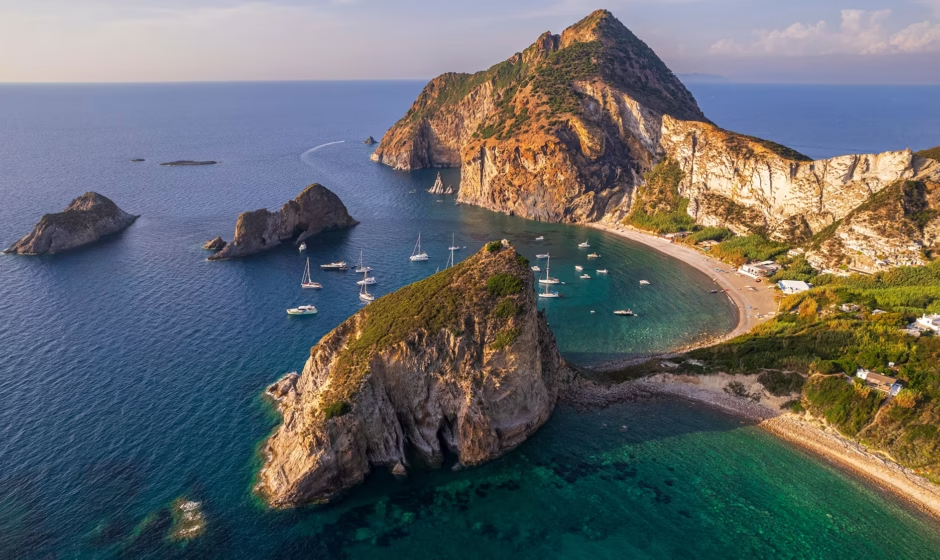

Hidden off Italy’s western coastline lies an island that feels almost frozen in time. Palmarola is a place without roads, without phone signals, and with barely any permanent residents. Unlike most Mediterranean destinations, it has largely escaped mass tourism, preserving a raw and unspoiled character that is increasingly rare in modern Europe.
Dramatic volcanic cliffs, sea caves, and crystal-clear waters shape the island’s landscape. Small coves replace beaches, accessible mainly by boat, giving the coastline a sense of quiet isolation. With no formal infrastructure, visitors experience nature without distractions no traffic noise, no digital connectivity, and no crowded resorts. Life here follows daylight, weather, and the rhythm of the sea.
There are no hotels or paved streets on Palmarola. Accommodation is limited to a handful of seasonal homes and small guest options used mainly during the summer months. Electricity and supplies are minimal, reinforcing a lifestyle based on simplicity rather than convenience. For many travelers, this lack of development is exactly what makes the island so appealing.
Tourism exists, but only in a controlled and seasonal way. Day boats arrive during warmer months, yet even at peak times, the island never feels overwhelmed. Fishing, swimming, and exploring the rocky coastline remain the primary activities, with local seafood and traditional cooking adding to the experience. The absence of large crowds allows visitors to engage with the environment rather than consume it.
From an analysis perspective, Palmarola represents an alternative model of tourism one that prioritizes preservation over expansion. As overtourism strains many famous destinations, places like this highlight how limited access and minimal infrastructure can protect natural beauty while still allowing cultural and economic activity.
In a world defined by constant connection and movement, Palmarola stands as a reminder that isolation, when protected, can be a luxury rather than a limitation.