

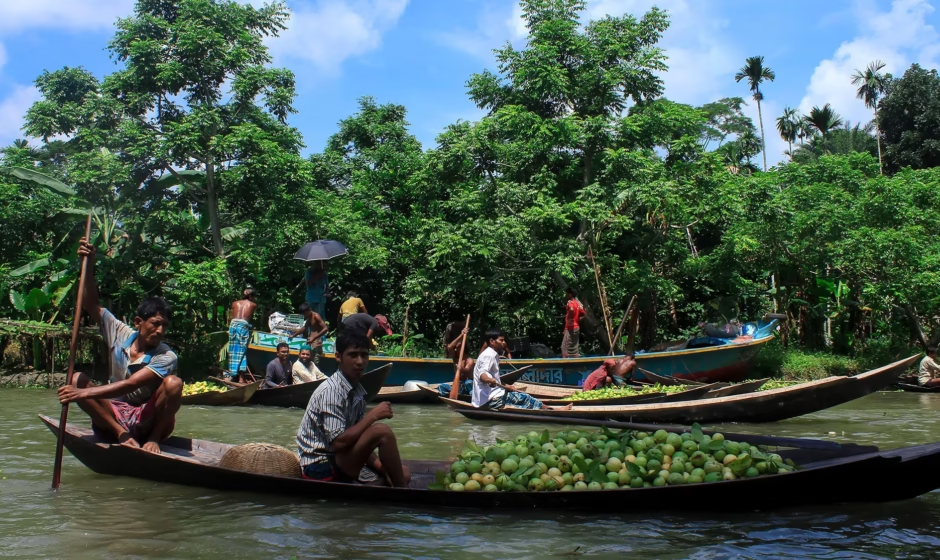

On paper, Bangladesh looks like a destination travelers should be rushing toward. Dense jungles home to rare wildlife, rolling tea gardens, one of the world’s longest natural beaches, vibrant river life, and a culture shaped by centuries of history. Yet despite these strengths, Bangladesh remains largely absent from global travel itineraries. The reason isn’t a lack of beauty it’s perception.
From a human-behaviour perspective, tourism is driven as much by emotional comfort as by attraction. Travelers don’t just choose places; they choose feelings. Safety, familiarity, and clarity matter deeply. When uncertainty overshadows curiosity, even the most compelling destinations struggle.
Bangladesh faces this psychological barrier more than a physical one. Many potential visitors associate the country with headlines rather than experiences. News coverage often focuses on challenges instead of daily life, quietly shaping assumptions. Humans rely heavily on narrative shortcuts when deciding where to go. If the dominant story feels complex or unfamiliar, hesitation follows.
Another factor is visibility. Tourism thrives on storytelling images, social proof, and shared experiences. Destinations that appear frequently in travel media feel accessible, even if they’re far away. Bangladesh, by contrast, rarely appears in mainstream travel inspiration. Without repeated exposure, curiosity never has the chance to grow.
Infrastructure also plays a behavioural role. Travelers prefer journeys that feel straightforward. Limited direct flights, fewer internationally known hotel brands, and less tourist-oriented marketing can make planning feel intimidating. When effort feels high, many simply choose alternatives that promise ease.
There’s also the comfort of precedent. People like to go where others have gone before. It reduces perceived risk. Bangladesh hasn’t yet reached that tipping point where visitor numbers themselves generate confidence. Until that happens, the cycle reinforces itself: fewer tourists lead to lower visibility, which leads to fewer tourists.
Yet those who do visit often describe a different reality warmth, hospitality, and richness that contrasts sharply with expectations. This gap between perception and experience is where Bangladesh’s tourism challenge truly lies. The country doesn’t need to invent attractions; it needs to reshape its story.
From a professional standpoint, the opportunity is significant. As global travelers seek less crowded, more authentic destinations, Bangladesh aligns perfectly with emerging preferences. What’s missing is trust-building clearer communication, consistent branding, and reassurance around accessibility and safety.
Ultimately, Bangladesh’s struggle isn’t about what it lacks, but about what the world hasn’t yet learned to see. Tourism begins in the mind before it begins on a map. And until perceptions shift, Bangladesh’s landscapes will remain quietly spectacular waiting for curiosity to catch up with reality.