

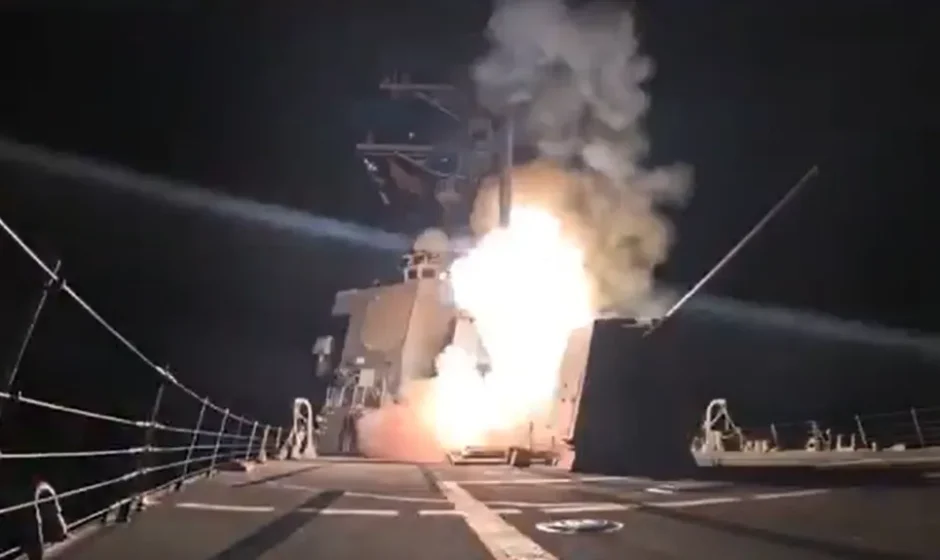

The United States has launched targeted airstrikes against ISIS-affiliated militants in Nigeria, reinforcing Washington’s evolving approach to global counterterrorism. Rather than concentrating solely on the Middle East, U.S. operations increasingly focus on regions where extremist groups are exploiting fragile political systems and local conflicts to expand their reach.
Nigeria has long faced a complex security challenge in its northeastern regions, where insurgent groups linked to ISIS and other extremist movements have carried out attacks against civilians, military personnel, and infrastructure. These groups thrive in areas marked by poverty, displacement, and limited government presence. The U.S. strikes were aimed at degrading militant leadership and operational capacity, reducing the immediate threat to local and regional stability.
American officials described the operation as precise and intelligence-driven, emphasizing efforts to avoid civilian casualties. This reflects a broader U.S. strategy that prioritizes targeted actions, intelligence sharing, and support for partner nations rather than large-scale troop deployments. Africa has become an increasingly important front in counterterrorism planning as extremist organizations adapt to pressure elsewhere by relocating and rebranding.
The strikes also highlight the limits of military solutions alone. While airstrikes can disrupt networks and eliminate high-value targets, analysts stress that long-term stability in Nigeria depends on more than security operations. Addressing root causes — such as unemployment, governance gaps, and humanitarian crises — remains essential to preventing extremist groups from regenerating.
For Nigeria, U.S. involvement brings both support and scrutiny. Foreign assistance can strengthen counterterrorism efforts, but it also underscores the challenges faced by local security forces operating across vast and difficult terrain. Coordination between international partners and Nigerian authorities is critical to ensure operations align with national priorities and civilian protection.
On a global level, the strikes send a clear signal that ISIS affiliates remain a priority regardless of geography. The U.S. continues to frame counterterrorism as a transnational issue, requiring rapid response capabilities and global reach. This approach aims to prevent regional threats from escalating into broader international security risks.
Critics caution that repeated airstrikes risk entrenching cycles of violence if not paired with political reform and development initiatives. Supporters argue that failing to act allows extremist groups to consolidate power and expand influence.
Ultimately, the U.S. strikes in Nigeria reflect a changing security landscape. As extremist movements fragment and spread, counterterrorism efforts are becoming more dispersed, targeted, and dependent on international cooperation. Whether this strategy can deliver lasting stability will depend on how effectively military action is integrated with diplomacy, development, and local governance reforms.