

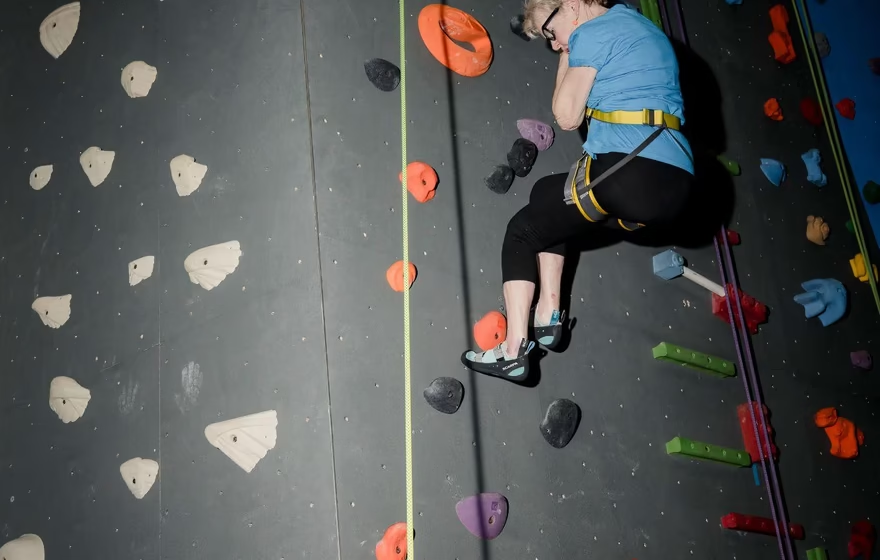

For people living with Parkinson’s disease, daily movement can become an ongoing challenge. Tremors, stiffness, and balance issues often make even simple tasks feel daunting. Yet for a growing community of individuals with Parkinson’s, an unexpected activity is offering both physical and emotional relief: rock climbing.
At first glance, rock climbing may seem like an unlikely fit for a neurological condition associated with movement difficulties. However, climbing gyms across the country are becoming safe, supportive spaces where people with Parkinson’s can push their limits in controlled environments. With harnesses, supportive instructors, and adaptive techniques, climbers are encouraged to focus on balance, coordination, and strength — all key areas affected by the disease.
Rock climbing engages both the body and the mind. Each climb requires problem-solving, deliberate movement, and concentration, helping participants stay mentally present. For many, this mental engagement provides a welcome distraction from symptoms and fosters a sense of control over their bodies. Climbers often report that while they are on the wall, tremors lessen as focus and muscle engagement increase.
Beyond the physical benefits, the emotional impact is just as powerful. Parkinson’s can be isolating, and many people struggle with the loss of independence that comes with a progressive condition. Climbing communities help counter that isolation by creating environments built on encouragement rather than limitation. Celebrating small victories — reaching the next hold or completing a climb — becomes a source of confidence and pride.
Experts emphasize that exercise plays a crucial role in managing Parkinson’s symptoms, helping improve mobility, posture, and overall well-being. Activities like rock climbing add an element of joy and adventure that traditional workouts may lack. Importantly, participants are not competing against others, but challenging themselves at their own pace.
The visual stories and personal experiences shared by climbers highlight a powerful message: Parkinson’s does not define what people can or cannot do. While the disease presents real challenges, adaptive activities allow individuals to continue exploring their physical potential and redefining their limits.
Rock climbing is not a cure, but for many living with Parkinson’s, it represents something equally valuable — hope, empowerment, and resilience. By embracing movement in creative ways, these climbers are proving that strength is not only about physical ability, but about determination, community, and the courage to keep reaching higher.